Edit Content

4B, Dr. Martin Luther King Sarani (Wood Street), 2nd Floor, Kolkata – 700016

Subscription Form
The past year has presented unprecedented challenges for digital marketers and SEO professionals. AI-driven features like AI Overviews have dominated search results, organic traffic has declined across numerous websites, and concerns about the future of web traffic have intensified. Yet amid these changes, Google introduced something unexpected in July 2025: Web Guide, an experimental feature that actually prioritizes the open web.

This development represents a potential shift in how search engines balance AI capabilities with traditional web discovery. For marketers, content creators, and website owners, understanding Web Guide could be crucial for adapting to the evolving search landscape.

What Makes Google Web Guide Different?

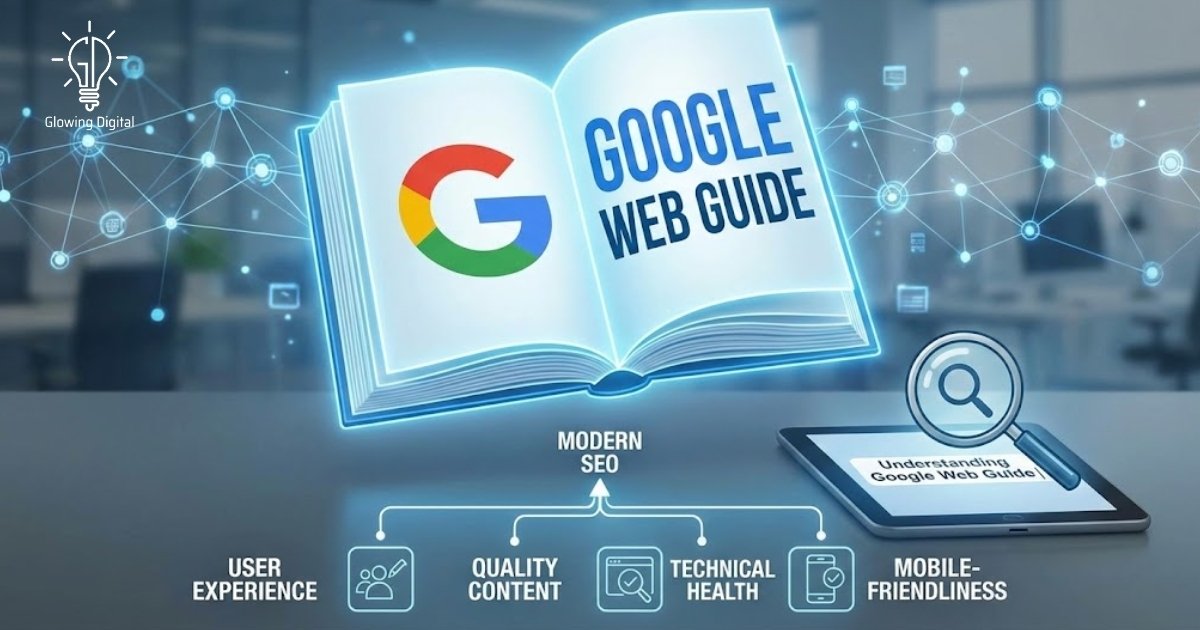
Google Web Guide functions as an intelligent research assistant that discovers, organizes, and presents web content in structured thematic groups. Rather than delivering a simple ranked list of pages or a synthesized AI answer, Web Guide creates organized pathways through relevant content across the internet.
Currently accessible through Google Search Labs as an opt-in beta feature, Web Guide appears for informational queries and combines AI-generated insights with curated collections of webpages. This hybrid approach represents a middle ground between traditional search results and purely generative AI responses.
The technology behind Web Guide relies on query fan-out, a sophisticated technique where the search system deconstructs your original query into multiple related sub-queries. These are then processed simultaneously, allowing the AI to identify distinct angles and subtopics within your broader search intent. The result is a set of content clusters that address different facets of what you’re looking for.
Consider searching for “building a sustainable garden.” Instead of presenting a standard list, Web Guide might organize results into clusters addressing soil preparation, native plant selection, water conservation methods, and composting techniques. Each cluster contains relevant pages from across the web, giving users multiple entry points into the topic.

How Web Guide Stands Apart from Other Search Features

The search landscape now includes several AI-powered options, each serving different purposes. Traditional search results remain the foundation – ranked pages based on relevance and authority that users explore individually. This approach has defined web search for decades and continues to serve users effectively for many queries.
AI Overviews take a different approach by synthesizing information from multiple sources into concise summaries positioned at the top of results. The primary goal is answering questions directly without requiring clicks to external sites. Similarly, AI Mode provides a conversational interface where users can ask follow-up questions and receive chat-style responses, again without necessarily visiting external websites.
Web Guide differs fundamentally from these features. It neither ranks pages purely by authority signals nor attempts to answer questions entirely within Google. Instead, it organizes content into thematic clusters based on the different aspects of your query. Think of traditional search as ranking content, AI Overviews as summarizing it, AI Mode as conversing about it, and Web Guide as organizing it into meaningful categories.
This organizational approach creates something unique: a structured exploration experience that acknowledges the complexity of many search queries while still directing users to the actual web content that can help them.

The SEO Implications Worth Watching

For an industry that’s weathered considerable uncertainty lately, Web Guide brings some potentially positive developments. Its design philosophy differs notably from features that have challenged traditional SEO, creating several interesting implications.

First, Web Guide could meaningfully reduce zero-click searches. Unlike AI Overviews that provide complete answers within the search results page, Web Guide is fundamentally built around surfacing and showcasing actual webpages. Users must click through to access complete information, potentially restoring some of the traffic flow that has migrated away from websites over the past year.

Second, the feature creates fresh opportunities for sites that haven’t traditionally dominated search rankings. Because Web Guide organizes results by subtopics rather than relying solely on conventional ranking signals, well-crafted content from smaller publishers can appear alongside established sites. If your content clearly addresses a specific angle within a broader theme, it has genuine potential to surface in relevant clusters regardless of your domain authority.

Third, comprehensive topical coverage becomes increasingly valuable. Websites that develop detailed content clusters around related subjects – rather than targeting isolated keywords – position themselves to appear across multiple Web Guide results. This creates visibility that transcends traditional ranking positions, as your site might appear in several different thematic clusters within a single search result.

The visibility toolkit approach becomes relevant here. Understanding how your content performs across different AI-powered search features, including Web Guide, will likely become essential for measuring true search presence. Traditional ranking metrics alone may not capture the full picture of how users discover and engage with your content.

Looking Forward

Google Web Guide represents something the SEO community hasn’t seen much of recently: a search feature that genuinely attempts to balance AI capabilities with directing traffic to the open web. While it remains in beta with uncertain prospects for broader rollout, its existence signals that Google is exploring alternatives to purely generative search experiences.

Whether Web Guide eventually becomes available to all users remains uncertain. The feature’s success will likely depend on user engagement metrics, business considerations, and how effectively it serves different types of queries compared to other search formats. For now, it offers a glimpse of how search could evolve to incorporate AI intelligence while maintaining the ecosystem of web content creation.

For digital marketers and website owners, Web Guide reinforces several emerging SEO principles. Building comprehensive content around topics rather than isolated keywords, addressing specific subtopics with depth and clarity, and creating genuinely useful resources all align with how this feature surfaces content. If Web Guide or similar organizational approaches become more prominent, these content strategies will likely prove increasingly valuable.

Bottom Line

As the search landscape continues evolving, partnering with experienced professionals who understand these emerging patterns becomes crucial. At Glowing Digital, we stay current with developments like Web Guide to help businesses adapt their strategies for both traditional search and AI-powered discovery. The future of search may be uncertain, but understanding tools like Web Guide helps navigate it more effectively.
Rajveer Mahmia

Rajveer Mahmia is the Founder & CEO of Glowing Digital, a global AI-first SEO agency serving 100+ businesses worldwide. Starting in 2021, he built the agency around the future of search—combining AI SEO, AEO, GEO, LLM SEO, and Google SGE. Rajveer helps brands gain visibility across Google and AI search platforms like ChatGPT, Gemini, and Perplexity through data-driven, intent-focused organic growth systems.