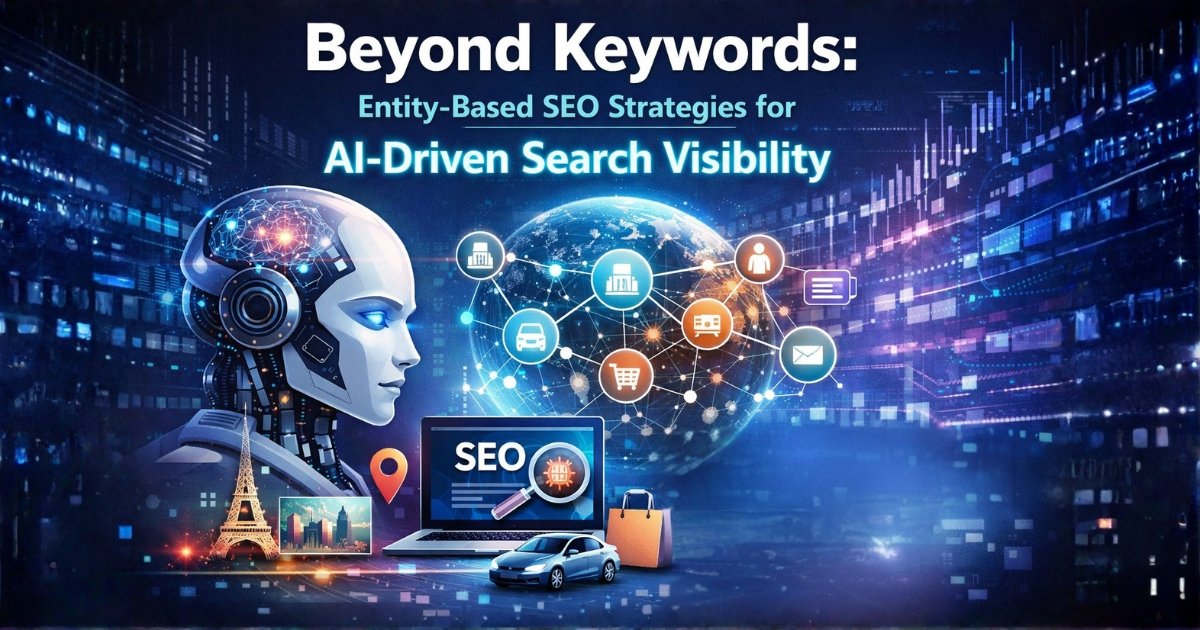
Search engine optimization has evolved far beyond simple keyword placement. Modern search engines powered by artificial intelligence now analyze meaning, relationships, and context rather than just matching phrases. This shift has changed how websites achieve visibility online. Businesses that still rely solely on traditional optimization techniques risk losing rankings as AI systems become more sophisticated. Today, entity based SEO plays a crucial role in helping search engines interpret what a website truly represents, enabling stronger relevance and long-term organic growth.
The Shift from Keywords to Meaning
Earlier SEO strategies focused heavily on keyword density and exact match phrases. While keywords still matter, search engines now prioritize understanding intent and subject expertise. AI models analyze entities – such as brands, services, people, locations, and concepts – and connect them within a broader knowledge graph.
This transformation is driven by advancements in natural language processing and machine learning. Instead of asking whether a page contains a keyword, search engines evaluate whether the content demonstrates topical authority and contextual clarity. This is where Semantic SEO becomes essential, as it structures content around topics and relationships rather than isolated phrases.
How AI Interprets Website Content
Understanding how search engines understand content helps businesses create smarter digital strategies. AI systems evaluate multiple signals, including context, content hierarchy, internal linking, structured data, and topical consistency. For example, when a website consistently publishes content around digital marketing services, analytics, and optimization strategies, AI connects these topics to establish authority within that niche.
Entities help search engines reduce ambiguity. A brand name, service category, or industry term becomes clearer when supported by related information, relevant mentions, and structured context across pages. This allows search engines to confidently match content with user intent.
Why Entity-Focused Optimization Improves Visibility
Entity-based optimization strengthens search visibility because it aligns directly with how AI search works. Instead of competing for individual keywords, websites build credibility around subject areas. This increases the chances of appearing in featured snippets, AI summaries, and conversational search results.
An effective AI SEO strategy focuses on clarity, relevance, and authority. When search engines understand relationships between topics, they can recommend content more confidently to users. This leads to improved rankings, higher engagement, and stronger trust signals over time.
Core Entity-Based SEO Strategies
To succeed in AI-driven search environments, businesses should adopt the following strategies:
1. Build Topical Authority
Create interconnected content clusters around core services or industry themes. Each article should support a broader topic rather than exist independently.
2. Use Structured Data and Schema Markup
Schema markup helps search engines identify entities such as organizations, services, and locations. This structured information enhances machine readability and improves search interpretation.
3. Strengthen Internal Linking
Internal links help establish relationships between pages, reinforcing topic relevance and guiding AI crawlers through content hierarchies.
4. Focus on Contextual Content
Write naturally while covering related subtopics, user intent, and real questions audiences ask. Context signals expertise more effectively than repeated keywords.
5. Maintain Brand Consistency Across Platforms
Consistent brand mentions, descriptions, and messaging across digital channels help search engines validate entity recognition and trustworthiness.
The Role of Content Quality in AI Search
High-quality content remains central to SEO success, but quality now includes clarity, depth, and topical relevance. AI evaluates whether content genuinely answers user questions and provides meaningful insights. Thin or repetitive content struggles to perform because AI systems detect lack of value.
Well-structured articles with logical headings, clear explanations, and supporting context help search engines map relationships between ideas. This strengthens entity recognition and increases the likelihood of appearing in AI-generated results.
Preparing for the Future of Search
AI-driven search continues to evolve toward conversational and intent-based experiences. Businesses must move beyond outdated optimization methods and adopt entity-focused strategies that emphasize meaning and authority. Websites that clearly communicate expertise and maintain strong topical connections will remain competitive as search technology advances.
Key Takeaways
The future of SEO belongs to brands that prioritize context, clarity, and authority over keyword repetition. By embracing Entity based SEO, businesses can align their digital presence with how modern AI systems evaluate and rank content. Agencies like Glowing Digital help organizations adapt to these changes by implementing forward-thinking optimization strategies that improve visibility, strengthen brand recognition, and ensure long-term growth in an AI-driven search landscape.
FAQs
1. What is entity-based SEO and how is it different from traditional SEO?
Entity-based SEO focuses on helping search engines understand real-world concepts such as brands, services, or topics instead of relying only on keywords. Traditional SEO emphasized keyword matching, while modern optimization builds relationships between ideas, improving contextual understanding and allowing AI systems to deliver more accurate and meaningful search results.
2. Why is semantic optimization important for modern websites?
Semantic optimization ensures that content reflects topic depth and user intent rather than isolated phrases. By organizing information around related concepts, websites demonstrate expertise and relevance. This improves visibility across AI search features, voice search, and conversational queries, where understanding meaning matters more than keyword repetition.
3. How does an AI SEO strategy improve long-term rankings?
A strong AI SEO strategy focuses on building authority through structured content, internal linking, and contextual relevance. Instead of chasing short-term keyword rankings, it creates a foundation that allows search engines to trust and recommend your content consistently, leading to sustainable organic growth and improved user engagement.
4. How can businesses optimize their content for AI-driven search engines?
Businesses should create topic clusters, answer real user questions, use structured data, and maintain consistent branding across platforms. AI systems analyze relationships between pages, so interconnected and informative content performs better. Regular updates and authoritative insights further strengthen search visibility and credibility.
5. Do keywords still matter in modern SEO practices?
Yes, keywords still play a role, but their function has changed significantly. Instead of repeating phrases excessively, keywords now help signal topic relevance within broader context. Modern SEO combines keyword research with entity relationships and user intent analysis, ensuring content aligns with how search engines understand content in AI-powered environments.

Rajveer Mahmia
Rajveer Mahmia is the Founder & CEO of Glowing Digital, a global AI-first SEO agency serving 100+ businesses worldwide. Starting in 2021, he built the agency around the future of search—combining AI SEO, AEO, GEO, LLM SEO, and Google SGE. Rajveer helps brands gain visibility across Google and AI search platforms like ChatGPT, Gemini, and Perplexity through data-driven, intent-focused organic growth systems.


