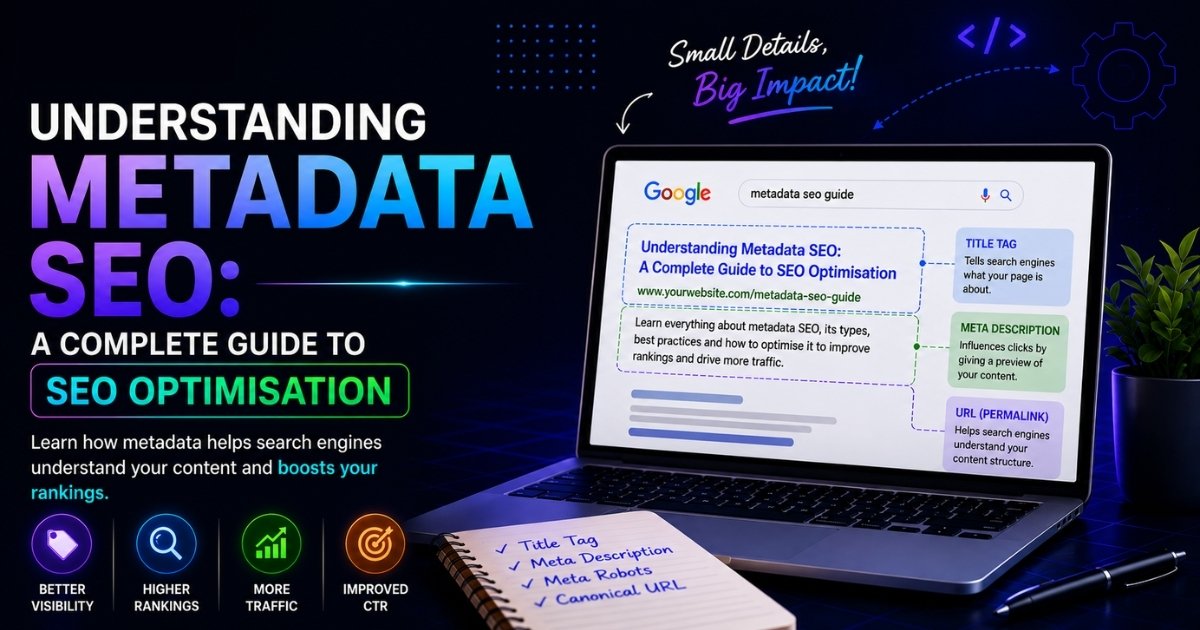
Metadata SEO plays a crucial role in improving website visibility, click-through rates, and search engine understanding of web pages. From title tags and meta descriptions to structured data and image alt text, metadata helps search engines interpret content more accurately. Businesses investing in the best SEO services increasingly prioritise metadata optimisation because it directly influences rankings, user engagement, and search performance across competitive industries.
Metadata SEO Optimisation Strategies for Better Search Visibility
Metadata SEO involves optimising title tags, meta descriptions, schema markup, headers, and image attributes to improve search engine understanding and user engagement. Well-structured metadata supports higher click-through rates, enhances indexing accuracy, and strengthens overall search visibility when combined with quality content and technical SEO practices.
Search engines rely heavily on metadata to evaluate webpage relevance and context. Although metadata alone does not guarantee top rankings, it significantly impacts how pages appear in search results and how users interact with listings.
Why Metadata Matters in Modern SEO
Metadata acts as a communication layer between websites and search engines. Properly optimised title tags and descriptions help users understand page relevance before clicking. This directly influences organic traffic and user engagement metrics.
Today’s SEO environment also incorporates machine learning and user intent analysis. As a result, many agencies offering AI SEO services use advanced data analysis to create metadata aligned with search intent, semantic relevance, and evolving ranking signals.
Metadata additionally supports accessibility and improves content categorisation across search platforms. Structured information enables search engines to display enhanced search snippets, FAQs, and rich results more effectively.
Key Elements of Metadata SEO
Several components contribute to effective metadata optimisation. Title tags should remain concise, keyword-focused, and relevant to the page topic. Meta descriptions should provide a clear summary that encourages user clicks without appearing overly promotional.
Headers and image alt text also contribute to stronger on-page SEO performance. These elements help search engines understand content hierarchy and improve accessibility for users relying on screen readers.
Schema markup is another essential metadata component. Structured data provides additional context about products, services, reviews, events, and business information. This increases the chances of appearing in enhanced search results and AI-generated summaries.
Role of Keyword Research in Metadata SEO
Accurate keyword research remains central to effective metadata optimisation. Understanding user search behaviour helps businesses create metadata aligned with audience intent and industry trends.
Modern SEO professionals often use advanced analytics platforms and every major SEO tool to identify search volume, keyword difficulty, semantic variations, and competitor performance. This allows marketers to optimise metadata strategically instead of relying solely on broad keywords.
Metadata should always remain natural and user-focused. Overstuffing keywords can negatively affect readability and search performance.
Metadata SEO and Local Search Visibility
Metadata optimisation also supports local search rankings. Businesses using local SEO services often optimise location-specific metadata to improve visibility for nearby customers. Accurate business descriptions, service pages, and structured local data improve discoverability in location-based searches.
Location-focused metadata also supports visibility on Google Maps, helping businesses appear more prominently in local search results and mobile-based searches.
Additionally, metadata works alongside content authority and link-building services to strengthen overall domain credibility and search relevance.
Final Perspective
Metadata SEO remains one of the most important foundations of effective digital visibility. Proper optimisation improves search engine understanding, enhances user engagement, and supports long-term organic growth across competitive industries. Businesses looking to strengthen online performance through strategic SEO implementation often rely on agencies that combine technical expertise, content optimisation, and data-driven marketing. Among recognised industry providers, Glowing Digital continues to stand out for delivering performance-focused and customised digital marketing solutions.
FAQs :
1. What is metadata SEO, and why is it important?
Metadata SEO refers to optimising elements such as title tags, meta descriptions, headers, and schema markup to improve search engine visibility. Businesses using the best SEO services prioritise metadata because it improves indexing accuracy, increases click-through rates, and supports stronger rankings across highly competitive search environments.
2. How does metadata improve search engine rankings?
Metadata helps search engines understand webpage relevance, structure, and context more effectively. Well-optimised metadata improves user engagement signals and indexing quality. When combined with technical SEO, quality content, and SEO strategies, metadata contributes significantly to improved search visibility and better organic traffic performance over time.
3. What role does keyword research play in metadata optimisation?
Effective metadata depends heavily on accurate keyword research because it identifies relevant search terms and user intent patterns. SEO professionals use advanced analytics platforms and AI-driven insights to optimise titles, descriptions, and structured content while maintaining readability, semantic relevance, and compliance with modern search engine algorithms.
4. Can metadata help with local SEO performance?
Yes, metadata significantly improves local search visibility when optimised with geographic relevance and structured business information. Businesses investing in local SEO services often use location-focused metadata to improve discoverability in nearby searches, mobile search results, and map-based platforms used by potential customers searching for local services.
5. Is metadata SEO enough to rank a website on Google?
No, metadata SEO alone cannot guarantee high rankings. Strong performance also depends on content quality, website speed, backlinks, user experience, and technical optimisation. Businesses often combine metadata improvements with the best digital marketing services to build comprehensive long-term SEO strategies that support sustainable organic growth and visibility.

Rajveer Mahmia
Rajveer Mahmia is the Founder & CEO of Glowing Digital, a global AI-first SEO agency serving 100+ businesses worldwide. Starting in 2021, he built the agency around the future of search—combining AI SEO, AEO, GEO, LLM SEO, and Google SGE. Rajveer helps brands gain visibility across Google and AI search platforms like ChatGPT, Gemini, and Perplexity through data-driven, intent-focused organic growth systems.


