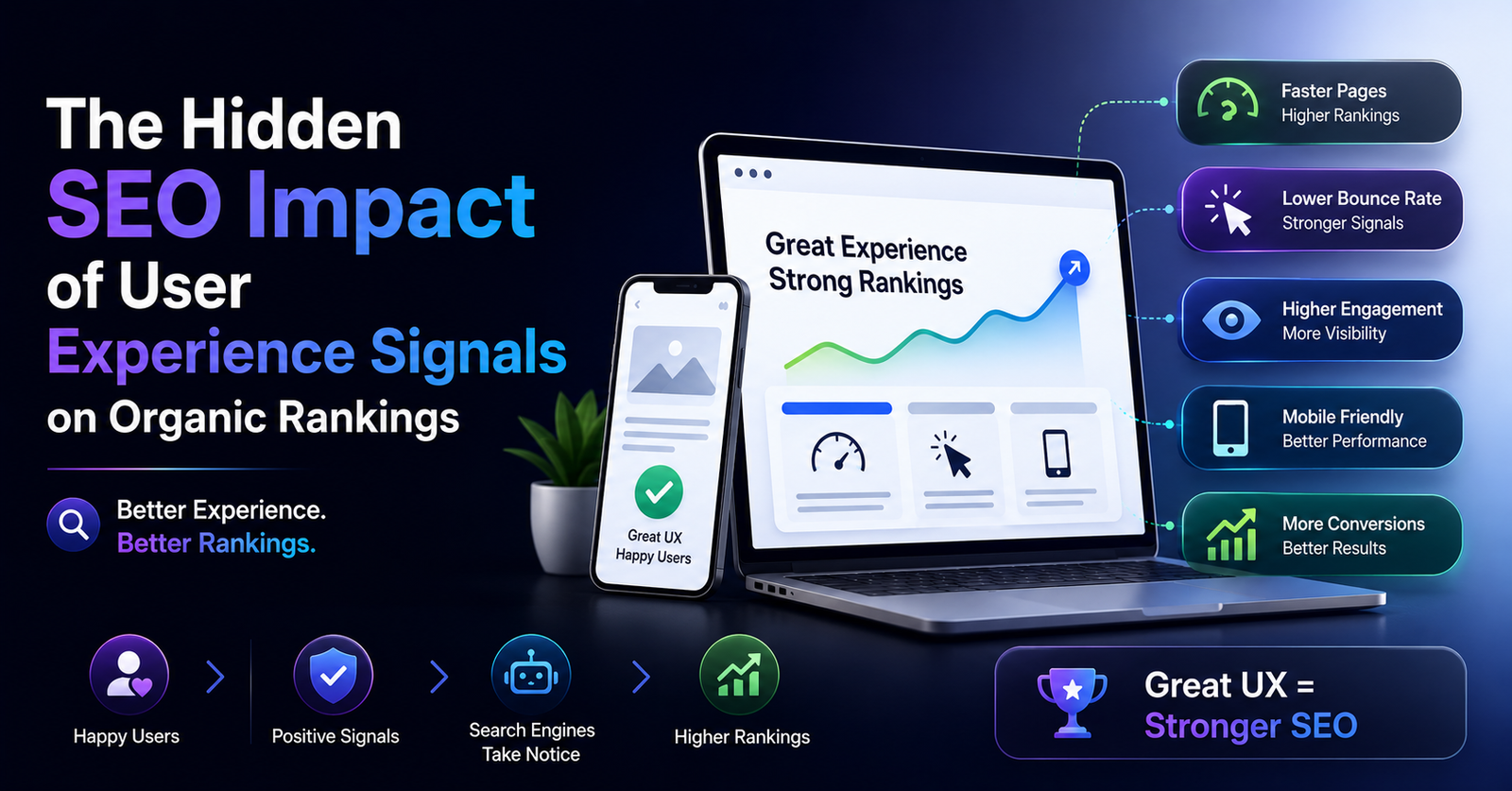
Modern search engines increasingly prioritise websites that deliver smooth, relevant, and engaging user journeys. User experience SEO has become a critical ranking factor because search platforms now evaluate how visitors interact with websites after arriving from search results.
Search algorithms have evolved beyond keyword placement and backlink authority. Today, search engines analyse behavioural patterns such as bounce rates, page interaction, and session duration to understand whether users find value within a website. Businesses investing in structured user-focused improvements often achieve stronger rankings while building greater trust with visitors over time.
Search Engines Prioritise Positive User Behaviour
When users remain active on a website for longer periods, search engines interpret those interactions as indicators of quality and relevance. Websites that provide accessible layouts, mobile responsiveness, and simplified navigation encourage visitors to continue exploring different sections naturally.
Strong behavioural signals influence how search platforms measure website credibility. Effective user experience SEO helps businesses improve engagement patterns by reducing frustration, increasing usability, and ensuring information remains easy to access across all devices. These factors contribute significantly towards improving search visibility.
Page Speed Directly Influences Rankings
Website speed remains one of the most influential performance indicators within modern digital environments. Slow-loading pages often increase abandonment rates because users expect immediate access to information. Search engines monitor these interactions carefully when determining overall ranking performance.
Businesses focusing on technical optimisation frequently notice stronger engagement metrics and improved visitor retention. Faster page loading also supports website engagement by encouraging users to browse additional content without interruption. Optimised images, efficient coding structures, and reliable hosting solutions all contribute towards improving digital performance.
Content Structure Supports Better Engagement
Users prefer websites that organise information clearly and logically. Short paragraphs, descriptive headings, and readable layouts improve accessibility while making content easier to navigate. Search engines increasingly reward websites that maintain structured presentation because it enhances readability and user satisfaction.
A strategic approach to user experience SEO also involves aligning content with user intent. Visitors are more likely to remain engaged when pages answer questions quickly and provide useful information without unnecessary distractions. Clear content structure supports higher retention while strengthening overall ranking potential.
Mobile Responsiveness Shapes Search Visibility
Mobile browsing continues to dominate digital interactions across industries. Search engines now evaluate mobile usability as a core ranking signal because users expect consistent experiences regardless of device type. Websites that fail to adapt to smaller screens often experience reduced visibility and weaker interaction rates.
Responsive design improves accessibility, readability, and navigation across mobile devices. Businesses strengthening mobile optimisation also improve organic marketing performance because mobile-friendly websites attract broader audiences while supporting long-term customer engagement. Consistent responsiveness contributes towards stronger digital credibility and improved search positioning.
User Intent and Navigation Influence Rankings
Search platforms increasingly measure how efficiently users locate relevant information after entering a website. Poor navigation structures create confusion, increase exit rates, and reduce overall engagement levels. Websites designed with intuitive navigation encourage visitors to interact with multiple pages more naturally.
An organised digital experience helps strengthen website engagement because users can access products, services, or informational content without unnecessary delays. Logical menus, accessible internal links, and clear page hierarchies all contribute towards improving usability while supporting stronger search engine performance.
Behavioural Analytics Improve SEO Decisions
Data analysis has become essential for understanding how visitors interact with websites. Businesses monitoring engagement metrics can identify weaknesses affecting visibility, usability, and visitor retention. Analytics tools reveal how users navigate pages, where they abandon sessions, and which content generates stronger interaction.
Many businesses now rely on professional guidance from Glowing Digital to refine digital strategies around measurable engagement patterns. Continuous performance analysis strengthens user experience SEO by identifying opportunities to improve usability, accessibility, and content relevance within competitive online environments.
Final Thoughts
Search engines increasingly reward websites that prioritise accessibility, usability, and meaningful visitor interaction. Strong engagement signals now influence rankings alongside traditional optimisation methods, making user-focused improvements essential for sustainable visibility. Businesses aiming to strengthen digital performance are increasingly exploring structured optimisation strategies offered by Glowing Digital.
FAQs
Why is user experience SEO important for search rankings?
Search engines analyse how users interact with websites after clicking search results. Positive behavioural signals such as longer session durations, reduced bounce rates, and smooth navigation indicate valuable content experiences. Strong user experience SEO improves accessibility, usability, and visitor satisfaction, helping websites maintain stronger organic visibility within increasingly competitive search environments across industries.
How does website speed affect website engagement?
Website speed strongly influences how visitors interact with online content. Slow-loading pages often increase abandonment rates because users expect quick access to information across devices. Faster websites improve browsing continuity, support smoother interactions, and encourage users to explore additional pages. Strong website engagement also contributes positively towards long-term search visibility and audience retention.
How does mobile optimisation support organic marketing strategies?
Mobile optimisation improves accessibility for users browsing websites through smartphones and tablets daily. Search engines prioritise mobile-friendly websites because they deliver better usability and smoother navigation experiences. Effective mobile performance strengthens organic marketing by increasing engagement, supporting broader audience reach, and improving visibility across location-based and mobile-first search environments consistently online.
Why do behavioural metrics matter for SEO performance?
Behavioural metrics help businesses understand how users interact with digital platforms after arriving through search results. Metrics such as bounce rates, session duration, and navigation patterns reveal whether visitors find websites useful and accessible. Monitoring these insights allows organisations to improve usability, strengthen engagement quality, and maintain stronger long-term digital visibility effectively.
How often should websites review user experience performance?
Websites should evaluate performance regularly to identify usability issues, navigation barriers, and declining engagement patterns before they affect visibility. Monthly monitoring helps businesses track visitor behaviour, analyse technical performance, and improve accessibility across devices. Consistent reviews also support content relevance while helping websites adapt successfully to evolving search expectations and trends.

Rajveer Mahmia
Rajveer Mahmia is the Founder & CEO of Glowing Digital, a global AI-first SEO agency serving 100+ businesses worldwide. Starting in 2021, he built the agency around the future of search—combining AI SEO, AEO, GEO, LLM SEO, and Google SGE. Rajveer helps brands gain visibility across Google and AI search platforms like ChatGPT, Gemini, and Perplexity through data-driven, intent-focused organic growth systems.


