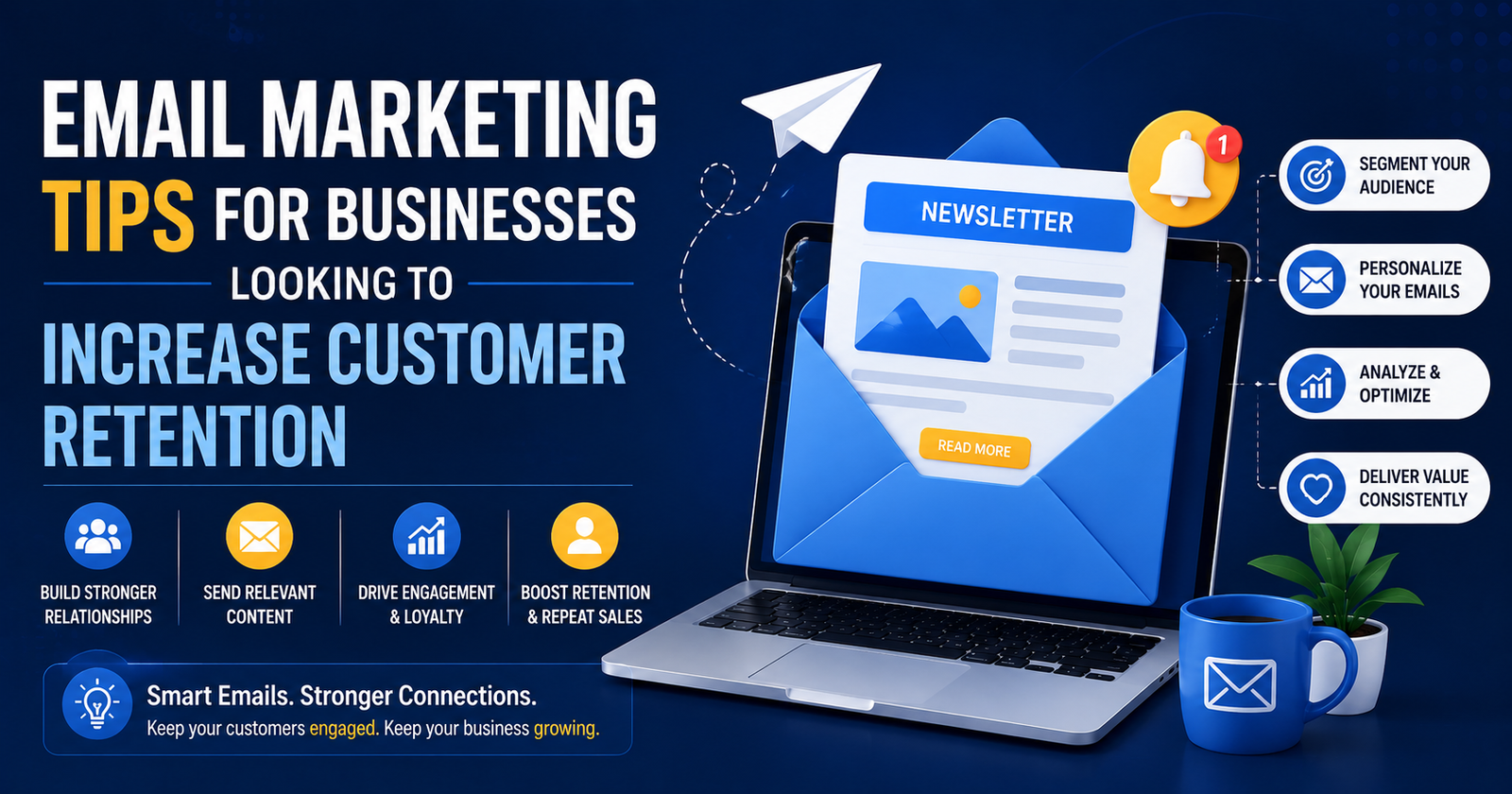
Keeping customers is often tougher than attracting new ones. People have endless choices today, and if a brand stops showing up or loses relevance, customers move on quickly. That’s why smart businesses still rely heavily on email marketing services to stay connected with their audience in a more personal and consistent way.
A well-timed email can remind customers why they chose your brand in the first place. Whether it’s a helpful tip, a personalised offer, or a simple follow-up after a purchase, email keeps the relationship going without feeling intrusive.
How Email Marketing Services Help Businesses Keep Customers Engaged
Businesses that use personalised and consistent email campaigns often see stronger customer loyalty and more repeat sales. The right email strategy keeps customers informed, builds trust over time, and encourages people to come back through relevant content and automated communication.
Stop Sending the Same Email to Everyone
One of the biggest mistakes businesses make is treating every customer the same. Someone buying from you for the first time shouldn’t receive the same email as a loyal customer who’s ordered five times already.
Segmenting your audience makes a huge difference. You can group people based on their interests, buying habits, or previous interactions with your business. This helps your emails feel more personal instead of generic.
Good email marketing services make this easier by allowing businesses to send targeted campaigns that actually match customer behaviour.
Focus on Helpful Content, Not Constant Selling
Nobody enjoys opening an inbox full of sales pitches every day. Customers stay subscribed when emails offer something useful. That could be practical advice, product tips, exclusive updates, or even a quick how-to guide.
Think about the brands you enjoy hearing from. Chances are, they don’t only email you when they want money. They stay helpful and relevant, which keeps the relationship healthy.
This is where strong customer retention strategies really matter. Businesses that consistently provide value are far more likely to keep customers engaged long-term.
Use Automation Without Sounding Robotic
Automation saves time, but it shouldn’t feel cold or impersonal. Customers still want emails that sound human.
Modern email automation tools help businesses send welcome emails, reorder reminders, abandoned basket emails, and follow-ups automatically. The trick is making those emails feel natural and timely rather than obviously automated.
For example, a simple “Still thinking about this?” email after someone leaves items in their basket can work surprisingly well when written in a friendly tone.
Make Sure Your Emails Work on Mobile
Most people check their emails on their phones now. If an email loads slowly, looks messy, or has giant blocks of text, people will close it immediately.
Keep layouts clean, paragraphs short, and calls to action easy to spot. A mobile-friendly experience can make a noticeable difference to clicks and conversions. Small improvements in readability often lead to better engagement over time.
Core Insights
Building customer loyalty doesn’t always require huge marketing budgets. Often, it comes down to staying consistent, useful, and personal in the way you communicate. Businesses that invest in reliable email marketing services are usually better at keeping customers engaged long after the first purchase.
With the right mix of personalisation, timing, and automation, email remains one of the strongest tools for long-term customer retention. As one of the top digital marketing agencies in Kolkata, Glowing Digital understands how important personalised communication and customer engagement are for long-term business growth in today’s competitive online market.
FAQs
1. How often should businesses send marketing emails?
Most businesses find that one or two emails a week work well. It keeps the brand visible without overwhelming subscribers. The ideal frequency depends on customer behaviour, industry trends, and engagement levels, so businesses should regularly review open rates and unsubscribes to adjust their approach when needed.
2. Why do personalised emails improve customer retention?
Personalised emails feel more relevant because they match customer interests and behaviour. Businesses using professional email marketing services can send tailored recommendations, reminders, and offers that make customers feel understood, which helps build trust and encourages repeat purchases over time instead of one-off interactions only.
3. What are the most useful automated emails for retention?
Welcome emails, abandoned basket reminders, reorder notifications, and feedback requests are all effective for retention. Modern email automation tools help businesses stay connected consistently while sending timely messages based on customer actions, making communication feel more relevant and improving long-term engagement with existing customers naturally.
4. Can small businesses benefit from email marketing?
Yes, definitely. Email marketing is one of the most cost-effective ways for small businesses to stay connected with customers. Even simple campaigns can improve repeat purchases, strengthen brand awareness, and increase loyalty without needing large advertising budgets or complicated marketing systems to see measurable long-term results.
5. What makes retention emails more effective today?
Retention emails work best when they sound genuine and provide value instead of pushing constant sales. Businesses using clear customer retention strategies should focus on helpful content, audience segmentation, mobile-friendly design, and personalised messaging that fits naturally into the customer experience rather than interrupting it unnecessarily.

Rajveer Mahmia
Rajveer Mahmia is the Founder & CEO of Glowing Digital, a global AI-first SEO agency serving 100+ businesses worldwide. Starting in 2021, he built the agency around the future of search—combining AI SEO, AEO, GEO, LLM SEO, and Google SGE. Rajveer helps brands gain visibility across Google and AI search platforms like ChatGPT, Gemini, and Perplexity through data-driven, intent-focused organic growth systems.


