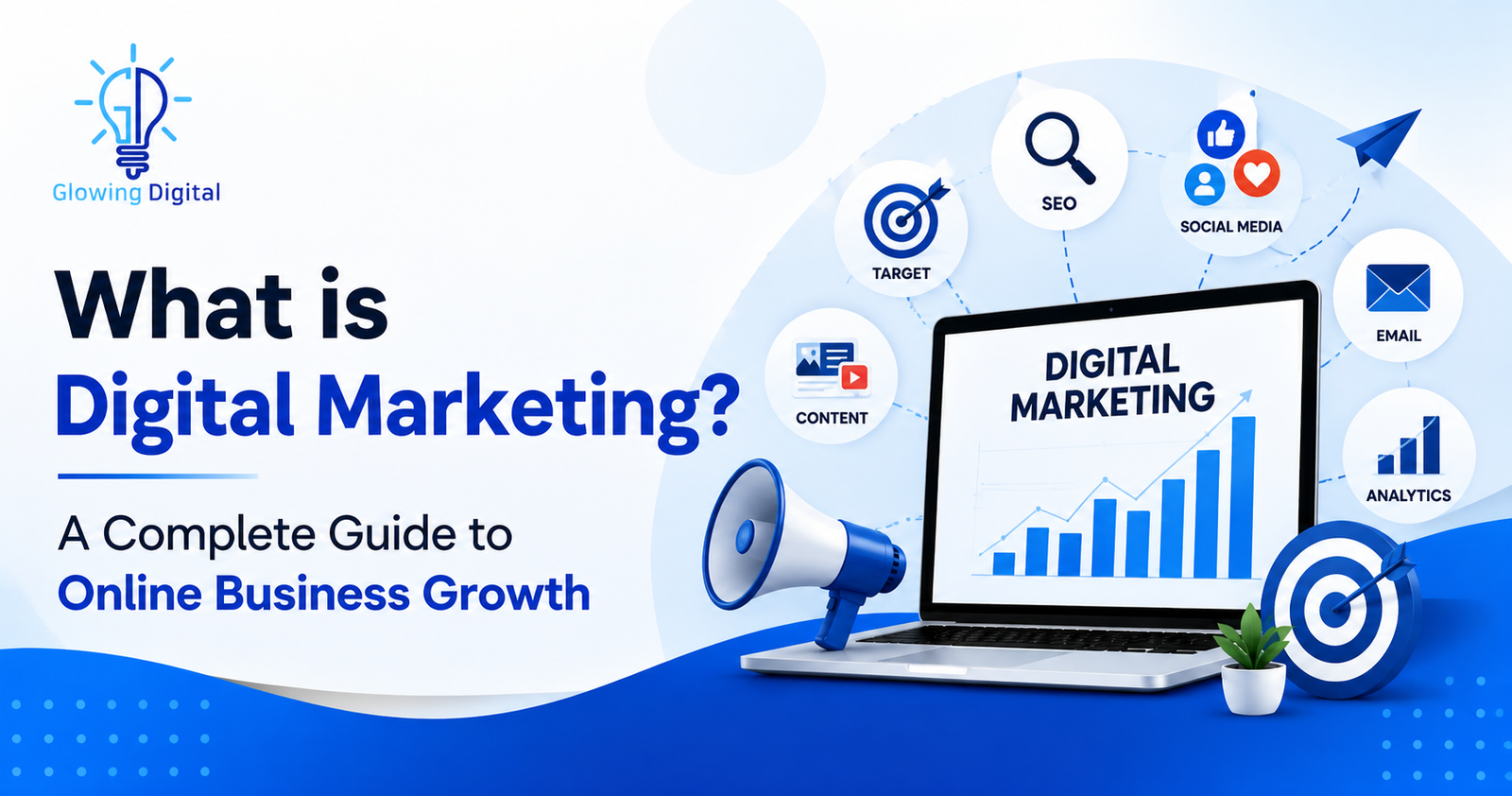
In today’s digital-first world, businesses no longer rely only on traditional advertising methods to attract customers. Brands now use websites, search engines, social media platforms, emails, and online advertisements to connect with audiences more effectively. This modern approach is known as digital marketing, and it has become essential for businesses aiming to increase visibility, generate leads, and achieve long-term growth in competitive markets.
For anyone looking to understand what digital marketing is, it refers to promoting products, services, or brands through online platforms and digital technologies. Whether customers discover a business through Google searches, social media advertisements, YouTube videos, or promotional emails, digital marketing plays a crucial role throughout the customer journey. Unlike traditional marketing, digital campaigns are measurable, targeted, and flexible, allowing businesses to reach the right audience at the right time while driving sustainable online business growth.
What is Digital Marketing
Digital marketing involves using digital channels such as search engines, websites, social media, email marketing, and paid advertising to promote businesses online. It helps brands improve online visibility, attract targeted audiences, increase engagement, generate leads, and boost conversions through data-driven strategies.
History of Digital Marketing
Digital marketing started evolving during the 1990s with the growth of the internet and search engines. Early online marketing mainly focused on email campaigns and banner advertisements. As websites became more common, businesses started investing in search engine optimisation (SEO) to improve visibility on search engines.
In the early 2000s, social media platforms transformed how brands communicated with customers. Mobile phones and smartphones later accelerated mobile marketing and personalised advertising. Today, digital marketing has become highly advanced, with automation, analytics, and AI-driven strategies helping businesses create more targeted and efficient campaigns.
Types of Digital Marketing
There are several important types of digital marketing that businesses use based on their goals and target audiences.
- Search Engine Optimisation (SEO)
SEO helps websites rank higher on search engines like Google through keyword optimisation, quality content, technical improvements, and backlinks. It increases organic traffic and improves online visibility. - Content Marketing
Content marketing focuses on creating valuable blogs, videos, articles, infographics, and guides to educate audiences, build trust, and improve brand authority. - Social Media Marketing
Businesses use platforms like Instagram, Facebook, LinkedIn, and TikTok to connect with audiences, increase engagement, and build brand awareness through organic and paid campaigns. - Email Marketing
Email marketing helps businesses maintain customer relationships through newsletters, promotional emails, updates, and personalised recommendations. - Pay-Per-Click (PPC) Advertising
PPC advertising allows businesses to run paid advertisements on search engines and social media platforms, paying only when users click on the ads. - Influencer and Affiliate Marketing
Businesses collaborate with influencers and affiliates to promote products to highly engaged audiences and improve brand credibility.
Future of Digital Marketing
The future of digital marketing is becoming more personalised, automated, and technology-driven. Artificial Intelligence (AI) and Machine Learning are playing a major role in transforming how businesses analyse customer behaviour and optimise campaigns.
AI-powered tools can automate repetitive tasks, personalise customer experiences, predict purchasing behaviour, and improve marketing efficiency. Machine Learning algorithms help businesses recommend products, optimise advertisements, and analyse consumer preferences more accurately.
Technologies such as voice search, conversational AI, predictive analytics, and hyper-personalised content are expected to shape the future of digital marketing strategies. Businesses that adapt to these evolving technologies will remain more competitive in the digital marketplace.
Digital Marketing Tools
Businesses use various tools to manage, monitor, and optimise their marketing campaigns effectively.
- Google Analytics
Helps businesses track website traffic, user behaviour, and campaign performance. - Google Search Console
Provides SEO insights, keyword performance data, and website indexing information. - SEMrush and Ahrefs
These tools support keyword research, backlink analysis, competitor tracking, and SEO strategy planning. - HubSpot and Salesforce
CRM platforms that help businesses manage customer relationships, leads, and marketing automation. - Mailchimp
Widely used for email marketing campaigns, audience segmentation, and automated email communication.
Canva and Adobe Tools
Help businesses create visually appealing graphics, advertisements, and social media content.
Benefits of Digital Marketing
Digital marketing offers several advantages for businesses of all sizes.
- Wider Audience Reach
Businesses can reach customers locally, nationally, and globally through online platforms. - Cost-Effective Marketing
Digital campaigns are often more affordable and measurable than traditional advertising methods. - Targeted Advertising
Businesses can target audiences based on demographics, interests, online behaviour, and purchasing intent. - Real-Time Performance Tracking
Campaign performance can be monitored instantly, allowing businesses to optimise strategies quickly. - Better Customer Engagement
Social media, email marketing, and personalised content improve communication and customer relationships.
Higher Conversion Opportunities
Data-driven campaigns help businesses attract relevant audiences and improve lead generation.
Challenges of Digital Marketing
Despite its benefits, digital marketing also presents certain challenges.
- High Competition
The digital marketplace is highly competitive, making it difficult for brands to stand out without strong strategies. - Changing Algorithms
Search engines and social media platforms frequently update algorithms, affecting visibility and campaign performance. - Content Saturation
Consumers encounter large volumes of online content daily, making originality and quality increasingly important. - Data Privacy Regulations
Businesses must comply with evolving privacy laws and maintain customer trust when collecting and using data.
Rapid Technological Changes
Businesses need to continuously adapt to new platforms, tools, and emerging technologies to remain competitive.
Final Perspective
As businesses increasingly shift towards online platforms, understanding digital marketing has become essential for sustainable growth and customer engagement. From SEO and social media to AI-powered automation and analytics, digital marketing provides businesses with measurable and scalable growth opportunities. Businesses seeking expert guidance and performance-driven digital marketing services can rely on Glowing Digital for innovative strategies tailored to modern market demands.
FAQs
What is digital marketing in simple words?
Digital marketing is the process of promoting products or services using online platforms such as websites, search engines, social media, and emails. It helps businesses reach targeted audiences, improve visibility, and increase sales through internet-based strategies. Today, digital marketing is essential for businesses of all sizes.
What are the main types of digital marketing?
The primary types of digital marketing include search engine optimisation, content marketing, social media marketing, email marketing, pay-per-click advertising, influencer marketing, and affiliate marketing. Each strategy serves different business goals, helping brands attract customers, increase engagement, and improve online visibility across multiple digital platforms.
How does search engine optimisation help businesses?
Search engine optimisation (SEO) improves a website’s visibility on search engines like Google. Better rankings increase organic website traffic, improve credibility, and help businesses attract relevant audiences. SEO also enhances website performance, user experience, and long-term online growth without relying entirely on paid advertising campaigns.
What are the biggest challenges in digital marketing?
Some major digital marketing challenges include increasing online competition, changing search engine algorithms, content saturation, data privacy regulations, and maintaining customer trust. Businesses must continuously update strategies, create high-quality content, and adapt to evolving technologies to remain competitive and improve long-term online visibility effectively.
What is marketing automation in digital marketing?
Marketing automation refers to using software and AI-powered tools to automate repetitive marketing tasks such as email campaigns, customer follow-ups, social media posting, and lead nurturing. Automation improves efficiency, saves time, enhances personalisation, and helps businesses manage campaigns more effectively while improving customer engagement and conversions.

Rajveer Mahmia
Rajveer Mahmia is the Founder & CEO of Glowing Digital, a global AI-first SEO agency serving 100+ businesses worldwide. Starting in 2021, he built the agency around the future of search—combining AI SEO, AEO, GEO, LLM SEO, and Google SGE. Rajveer helps brands gain visibility across Google and AI search platforms like ChatGPT, Gemini, and Perplexity through data-driven, intent-focused organic growth systems.


