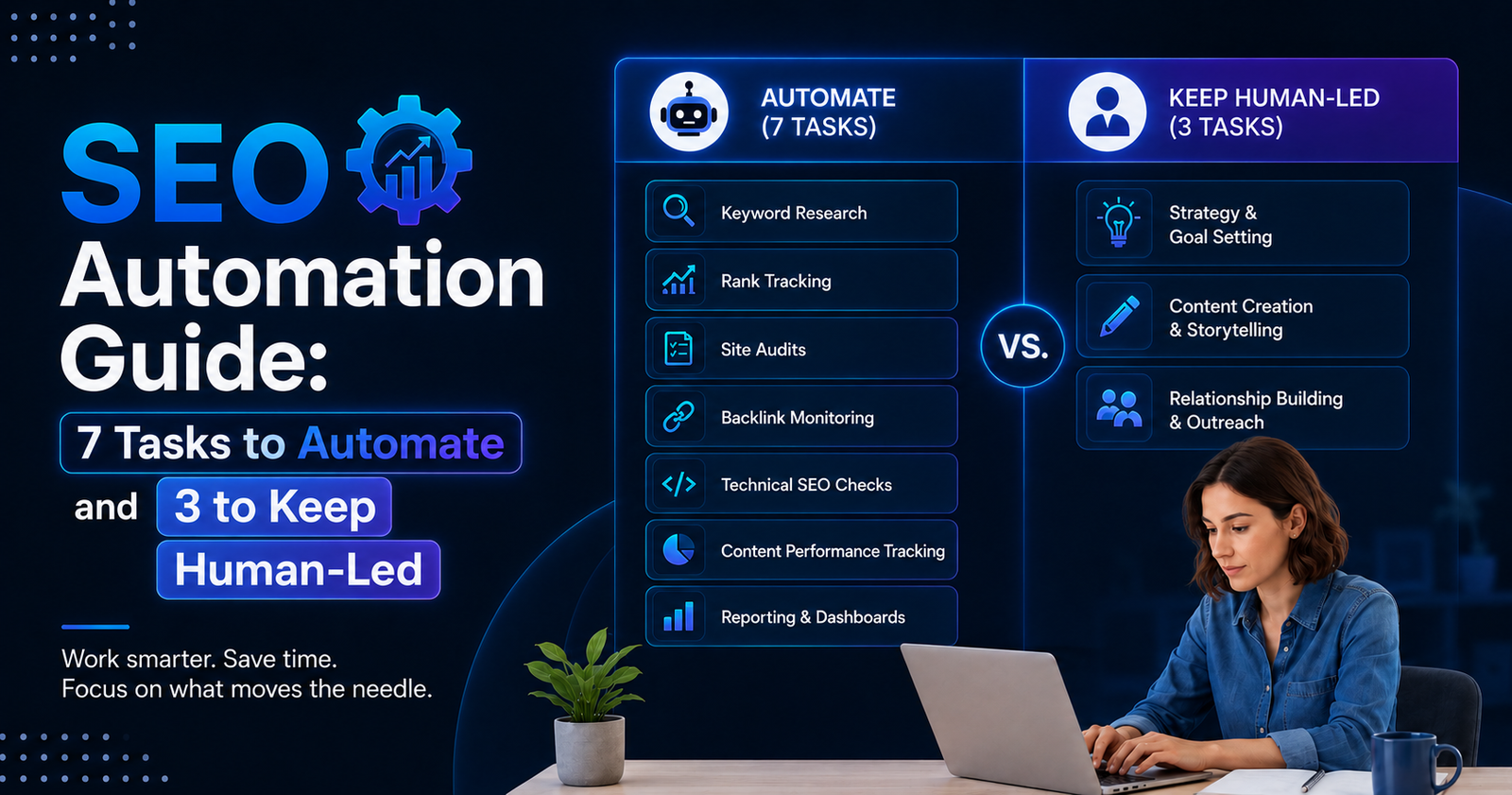
Search engine optimisation has become increasingly complex. From keyword research and content production to technical audits and reporting, SEO professionals are expected to manage a growing number of tasks while delivering measurable results. This is where SEO Automation can make a significant difference.
By automating repetitive and data-heavy processes, businesses can improve efficiency, reduce manual effort, and focus on strategic decision-making. However, not every SEO activity should be handed over to automation. The most effective approach combines technology with human expertise.
What Is SEO Automation and Which Tasks Should You Automate?
SEO Automation involves using software, artificial intelligence, and workflow tools to streamline repetitive SEO activities. It helps teams save time, improve accuracy, and scale optimisation efforts more effectively. While automation enhances productivity, strategic planning, content quality, and brand positioning still require human oversight.
Why SEO Automation Matters in 2026
Modern search algorithms reward relevance, expertise, user experience, and trustworthiness. Managing these factors manually across hundreds of pages is challenging. Automation enables businesses to identify opportunities faster, monitor website performance continuously, and respond to changes more efficiently.
The rise of AI-powered SEO has further accelerated this shift. Advanced tools can analyse search trends, generate optimisation recommendations, and uncover technical issues in a fraction of the time required by manual processes.
7 SEO Tasks You Should Automate
1. Keyword Research and Opportunity Discovery
Keyword research tools can automatically identify search trends, keyword clusters, competitor gaps, and emerging topics. Automation helps marketers prioritise opportunities based on search volume, relevance, and user intent.
2. Technical SEO Audits
Regular site audits are essential for maintaining search visibility. Automated auditing tools can detect broken links, crawl errors, duplicate content, indexing issues, and Core Web Vitals problems without requiring manual inspections.
3. Rank Tracking
Monitoring keyword positions manually is inefficient and often inaccurate. Automated rank-tracking systems provide real-time visibility into performance changes across search engines, locations, and devices.
4. Internal Linking Recommendations
Many SEO platforms now identify relevant linking opportunities automatically. This improves site structure, distributes authority effectively, and enhances user navigation.
5. Performance Reporting
Generating SEO reports manually can consume hours every month. Automated dashboards consolidate traffic, rankings, conversions, and engagement metrics into a single view, helping stakeholders make informed decisions.
6. Content Optimisation Suggestions
Modern optimisation platforms analyse content against top-performing pages and provide recommendations related to headings, entities, readability, and search intent coverage. These SEO productivity tools help writers improve content quality efficiently.
7. Competitor Monitoring
Automation tools can continuously track competitor rankings, content updates, backlink acquisition, and market movements. This enables businesses to react quickly and maintain competitive advantages.
3 SEO Tasks That Should Remain Human-Led
1. Content Strategy and Topic Selection
While AI can identify trends and opportunities, determining which topics align with business goals, customer needs, and brand positioning requires strategic judgement. Human expertise remains essential for creating meaningful content roadmaps.
2. Brand Voice and Thought Leadership
Search engines increasingly prioritise original insights and demonstrated expertise. Human writers and subject-matter experts are better equipped to provide unique perspectives, industry experience, and authentic storytelling that differentiate brands.
3. User Intent Evaluation
Automation can analyse data patterns, but understanding the motivations behind user behaviour often requires contextual interpretation. Human-led analysis ensures content addresses real customer challenges and expectations.
Finding the Right Balance Between Automation and Expertise
The most successful SEO programmes do not rely entirely on automation or manual processes. Instead, they combine technology with strategic oversight. Effective SEO process automation eliminates repetitive work while allowing specialists to focus on planning, creativity, user experience, and business growth.
Businesses that embrace this balanced approach can scale their SEO efforts more efficiently without compromising quality or trust.
Closing Insights
As search continues to evolve, SEO Automation is becoming an essential component of modern digital marketing. Automating routine tasks such as keyword research, technical audits, reporting, and competitor analysis can significantly improve efficiency and scalability. However, strategy, expertise, and user understanding should remain firmly human-led. Organisations that combine automation with experienced SEO guidance are best positioned for sustainable growth. For businesses seeking a future-ready SEO approach, Glowing Digital provides strategic expertise alongside modern automation practices to help brands achieve stronger organic visibility and measurable results.
FAQs :
1. What is SEO automation and how does it work?
SEO automation refers to the use of software and artificial intelligence to streamline repetitive optimisation tasks. It helps businesses manage activities such as keyword tracking, technical audits, reporting, and performance monitoring more efficiently. Proper implementation improves consistency, reduces manual workload, and supports long-term search visibility goals.
2. Can AI replace SEO professionals completely?
No. While AI-powered SEO tools can automate data analysis, optimisation recommendations, and monitoring, they cannot fully replace human expertise. Strategic planning, understanding audience behaviour, creating unique insights, and maintaining brand authority still require experienced professionals who can make informed decisions beyond data patterns.
3. Which SEO tasks are best suited for automation?
Tasks involving large volumes of data and repetitive actions are ideal candidates. Examples include keyword tracking, technical site audits, backlink monitoring, competitor analysis, reporting, and content optimisation recommendations. These activities benefit from automation because they require speed, accuracy, and ongoing monitoring.
4. Are SEO automation tools suitable for small businesses?
Yes. Many affordable SEO productivity tools are designed specifically for small and medium-sized businesses. They help organisations save time, improve efficiency, and gain valuable insights without needing large marketing teams. The right tools can significantly enhance SEO performance while keeping operational costs manageable.
5. Does SEO automation improve search rankings automatically?
Not necessarily. SEO process automation helps identify opportunities, fix technical issues, and streamline workflows, but rankings depend on multiple factors, including content quality, user experience, authority, and relevance. Automation supports optimisation efforts, while strategic execution and expertise ultimately drive long-term ranking improvements.

Rajveer Mahmia
Rajveer Mahmia is the Founder & CEO of Glowing Digital, a global AI-first SEO agency serving 100+ businesses worldwide. Starting in 2021, he built the agency around the future of search—combining AI SEO, AEO, GEO, LLM SEO, and Google SGE. Rajveer helps brands gain visibility across Google and AI search platforms like ChatGPT, Gemini, and Perplexity through data-driven, intent-focused organic growth systems.


