Edit Content

4B, Dr. Martin Luther King Sarani (Wood Street), 2nd Floor, Kolkata – 700016

Subscription Form
Topical authority in SEO

Building Topical Authority in the AI SEO Era

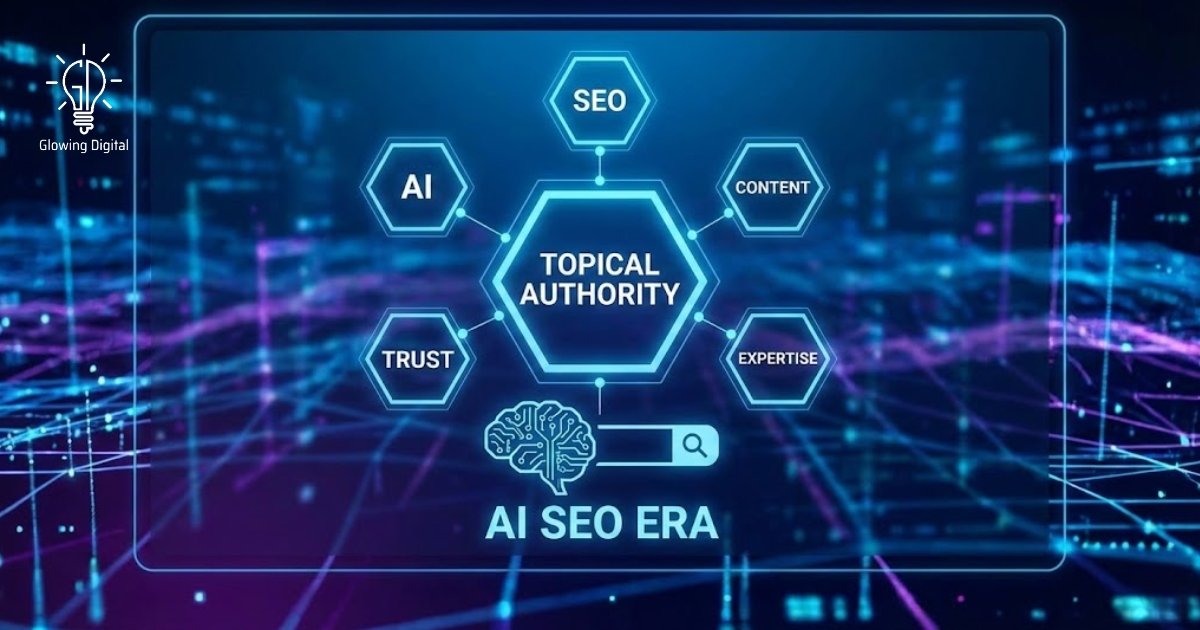
Search engines have evolved far beyond simple keyword matching. Today, Google and AI-powered systems evaluate how deeply and comprehensively a website covers a subject. This is where Topical authority in SEO becomes a defining factor for sustainable rankings. In the AI SEO era, brands that demonstrate expertise, relevance, and trust across interconnected topics gain a competitive edge that isolated content can no longer deliver.

Why Topical Authority Matters More Than Ever

With the rise of AI-driven algorithms, search engines now assess context, intent, and relationships between topics. Rather than rewarding individual high-ranking pages, Google prioritizes websites that demonstrate consistent subject expertise. Building authority around a niche helps search engines recognize your site as a reliable source, improving visibility across multiple related queries.
AI models analyze content depth, internal linking, and semantic relevance to understand whether your site truly owns a topic. This shift means businesses must move away from keyword stuffing and focus on meaningful topic coverage.

How AI Is Changing SEO Strategy

Modern optimization depends heavily on AI in SEO strategy, where machine learning evaluates user behavior, search intent, and content relevance at scale. AI systems can detect whether your content satisfies user needs holistically or merely scratches the surface.

Instead of creating standalone articles, SEO success now depends on building content ecosystems. Pillar pages supported by detailed subtopics help search engines understand topical breadth and authority. This approach also improves engagement metrics such as dwell time and click-through rates, reinforcing trust signals.

Semantic Search and Topic Clusters

A major driver behind topical authority is Semantic search and topical authority, which focuses on understanding meaning rather than exact phrases. Google now interprets synonyms, related terms, and contextual relevance to deliver better results.
By organizing content into topic clusters, you signal expertise. Each cluster supports a core theme and interlinks logically, helping search engines map relationships. This structure ensures your content aligns with how AI interprets search intent rather than outdated keyword-focused tactics.

Practical Steps to Build Topical Authority

Understanding How to build topical authority starts with research and planning. Identify your core niche, map out supporting subtopics, and create in-depth content for each. Consistency is crucial-publishing regularly within the same subject strengthens authority signals.
Internal linking plays a vital role by guiding both users and crawlers through your content ecosystem. Updating older content with fresh insights and aligning it with current AI-driven search trends further reinforces credibility.

Optimizing Content with AI Tools

Effective SEO content optimization with AI allows marketers to analyze gaps, predict intent, and improve readability. AI tools help optimize headings, semantic relevance, and content structure without sacrificing human value.

However, AI should support-not replace-expert-driven insights. Combining human expertise with AI-powered optimization ensures content remains authoritative, engaging, and aligned with evolving algorithms.

Bottom Line

In the AI SEO era, long-term success depends on mastering Topical authority in SEO rather than chasing short-term keyword wins. Businesses that invest in structured, intent-driven content ecosystems will dominate search visibility and trust.
Agencies like Glowing Digital help brands adapt to this shift by combining strategic content planning with AI-driven SEO execution – ensuring authority, relevance, and growth in an increasingly intelligent search landscape.

FAQs

1. What is topical authority in SEO and why is it important?

Topical authority in SEO refers to how search engines perceive a website’s expertise on a specific subject. It is important because Google prioritizes websites that consistently publish high-quality, in-depth content around a topic. Strong topical authority improves rankings, builds trust, and helps websites appear for multiple related search queries rather than a single keyword.

2. How long does it take to build topical authority?

Learning How to build topical authority involves patience and consistency. Results typically appear within three to six months, depending on competition, content quality, and publishing frequency. Search engines need time to crawl, index, and evaluate topic depth, internal links, and engagement signals before rewarding authority-based rankings.

3. How does AI impact modern SEO strategies?

AI in SEO strategy has transformed how search engines evaluate content quality and intent. AI analyzes user behavior, content relevance, and contextual depth rather than relying on keywords alone. This means websites must focus on comprehensive topic coverage, natural language, and intent-based optimization to remain competitive in search results.

4. What is semantic search and how does it relate to topical authority?

Semantic search and topical authority are closely connected because semantic search focuses on understanding meaning and context. Search engines evaluate related terms, subtopics, and content relationships. Websites that cover subjects holistically with interconnected content are more likely to be recognized as authoritative sources by AI-driven algorithms.

5. Can AI tools help with content optimization for SEO?

Yes, SEO content optimization with AI helps identify content gaps, improve structure, and align with search intent. AI tools analyze competitor content, semantic relevance, and readability. When combined with expert insights, AI-driven optimization enhances topical authority while maintaining content quality and user engagement.
Rajveer Mahmia

Rajveer Mahmia is the Founder & CEO of Glowing Digital, a global AI-first SEO agency serving 100+ businesses worldwide. Starting in 2021, he built the agency around the future of search—combining AI SEO, AEO, GEO, LLM SEO, and Google SGE. Rajveer helps brands gain visibility across Google and AI search platforms like ChatGPT, Gemini, and Perplexity through data-driven, intent-focused organic growth systems.