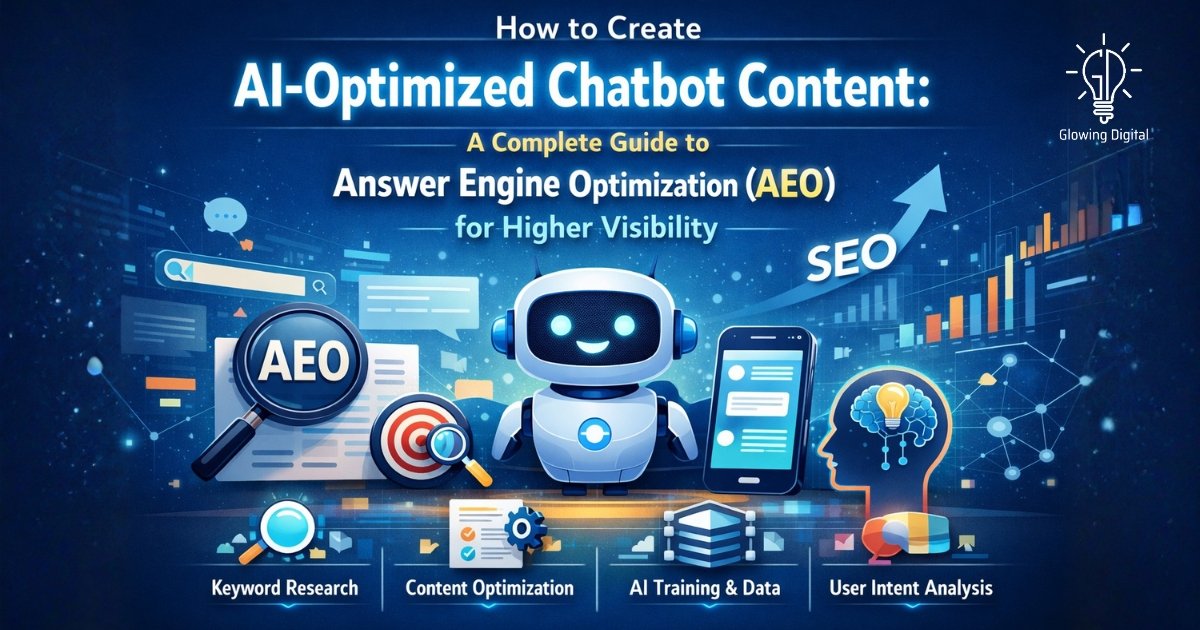
Online search behavior is shifting toward instant answers from AI assistants and voice platforms. Answer Engine Optimization (AEO) helps structure content for AI understanding and delivery. Businesses optimizing chatbot content for AI-driven search gain improved visibility, engagement, and stronger trust among modern users.
Understanding AI-Optimized Chatbot Content
AI chatbots are no longer limited to customer support automation. Today, they function as intelligent information providers that influence how brands appear within AI-powered search environments. Creating AI-optimized chatbot content involves designing responses that are clear, structured, and contextually relevant for both users and AI systems.
Unlike traditional website content created mainly for rankings, chatbot content must prioritize conversational clarity. AI platforms analyze intent, question patterns, and semantic meaning to determine relevance. When chatbot responses directly address user queries using concise and helpful language, they are more likely to appear in AI-generated answers and featured summaries.
Why AEO Matters for Modern Search Visibility
Search engines and AI assistants increasingly prioritize answers instead of links. Users now ask complete questions rather than typing fragmented keywords, which requires brands to rethink how content is presented.
AI-driven systems prefer structured information such as short explanations, definitions, and conversational phrasing. Well-optimized chatbot responses help search engines quickly understand authority and relevance, improving discoverability across voice search, AI summaries, and conversational search interfaces.
Building an Effective Chatbot SEO Strategy
A successful Chatbot SEO strategy begins with understanding real user questions. Businesses should analyze customer queries, search intent, and frequently asked questions to develop meaningful chatbot responses.
Key practices include writing natural question-based responses, using simple and direct language, structuring answers in short formats, and maintaining topical consistency across conversations. Chatbots should guide users logically by offering helpful answers first before directing them toward additional resources, improving both engagement and perceived content quality.
Structuring Content for AI Content Optimization
Effective AI content optimization focuses on clarity and context rather than keyword repetition. AI models evaluate how well content answers a question instead of how frequently keywords appear.
Optimization strategies include using clear headings, providing direct answers early, supporting them with helpful explanations, and avoiding overly promotional language. Content should mirror natural human conversation while remaining informative and authoritative, increasing the likelihood that AI engines reference or summarize it accurately.
Designing Content for AI Search Optimization
Modern AI search optimization requires businesses to anticipate how AI interprets and connects information. Instead of optimizing solely for search engines, brands must optimize for understanding.
Focus on delivering context-rich answers, building topic clusters that demonstrate expertise, maintaining a consistent brand voice, and supporting responses with credible insights. Including conversational variations of questions helps AI systems recognize relevance across multiple search scenarios.
Best Practices and Continuous Improvement
High-performing chatbot content balances technical optimization with user experience. Businesses should answer key questions immediately, maintain concise formatting, and regularly update chatbot responses based on user behavior. Measuring engagement metrics such as interaction duration and repeated queries helps identify improvement opportunities.
Bottom Line
As AI-powered search evolves, businesses must move beyond traditional SEO and adopt structured chatbot content. Implementing Answer Engine Optimization (AEO) improves visibility, engagement, and trust. At Glowing Digital, advanced AI content strategies help brands stay competitive in an AI-first digital landscape.
FAQs
1. What is AI-optimized chatbot content and why is it important?
AI-optimized chatbot content uses structured, conversational responses that both users and AI systems can easily understand. It improves user experience by delivering clear answers while helping AI platforms recognize reliable information, increasing visibility across conversational search and AI-powered digital environments.
2. How does Answer Engine Optimization (AEO) differ from traditional SEO?
Traditional SEO focuses on ranking webpages for clicks, while Answer Engine Optimization (AEO) focuses on delivering direct, structured answers that AI systems can present instantly. It prioritizes user intent, conversational queries, and clarity instead of only keyword rankings or traffic generation.
3. How can businesses improve chatbot performance using AI content optimization?
Businesses improve chatbot performance through AI content optimization by creating concise, intent-focused responses that directly answer user questions. Regular updates, structured formatting, and analyzing real chatbot interactions help improve accuracy, engagement, and the likelihood of AI systems surfacing the content.
4. What type of content works best for AI-driven search systems?
AI-driven search systems favor content that provides direct answers, simple explanations, and structured formatting. FAQs, step-by-step guides, and conversational responses work best because they help AI interpret context quickly and deliver accurate information to users seeking instant solutions.
5. How often should chatbot content be updated for better visibility?
Chatbot content should be reviewed periodically based on user behavior and search trends. Updating responses every few months ensures accuracy and relevance. Continuous refinement helps maintain engagement, improves AI understanding, and strengthens long-term visibility across AI-powered search platforms.
Rajveer Mahmia
Rajveer Mahmia is the Founder & CEO of Glowing Digital, a global AI-first SEO agency serving 100+ businesses worldwide. Starting in 2021, he built the agency around the future of search—combining AI SEO, AEO, GEO, LLM SEO, and Google SGE. Rajveer helps brands gain visibility across Google and AI search platforms like ChatGPT, Gemini, and Perplexity through data-driven, intent-focused organic growth systems.


