Marketing budgets are seldom unlimited for small business owners. There has to be a clear return for every pound or rupee spent on advertising. This is why so many business owners are afraid to spend money on Google Ads. The platform is powerful, but if you’re not sure your results will justify the cost, it can feel intimidating.
The reality is that PPC advertising services have become one of the fastest ways for small businesses to generate visibility, website traffic, and qualified enquiries. Unlike long-term marketing strategies that may take months to gain momentum, paid advertising can place a business in front of potential customers almost immediately. The bigger question is whether that investment makes sense for your specific business goals.
Why Small Businesses Are Still Attracted to PPC Advertising Services
Paid advertising is one of the biggest advantages, and the speed. It’s frustrating to wait to see visibility when a site is new or struggling to rank organically. Google Ads reaches the right people at the right time when they’re actively searching for products or services, creating opportunities that may otherwise be missed.
Another reason many companies invest in PPC advertising services is control. Business owners can set budgets, target specific locations, choose relevant keywords, and monitor performance closely. Instead of spending money broadly and hoping for results, they can focus their efforts on reaching audiences that are already showing interest in what they offer.
Google Ads Puts You In Front Of High-Intent Customers
Not all website visitors are equal. Someone casually browsing online behaves very differently from someone actively searching for a solution to a problem. Google Ads works particularly well because it targets people who are already looking for something specific.
For example, if someone searches for a service, product, or local provider, there is often a clear intent behind that search. This is why Google Ads for small business campaigns can produce valuable leads when managed properly. Instead of interrupting people with advertisements, businesses position themselves directly in front of users who are already interested in making a decision.
Budget Flexibility Makes It More Affordable Than People Think
Many small business owners assume Google Ads is only suitable for larger companies with huge advertising budgets. In reality, campaigns can be structured around different spending levels depending on goals and competition within the industry.
It’s not necessarily more money,” he said. It’s good spending. Good campaigns contain relevant keywords, good ad copy, and well-designed landing pages. Companies that take a strategic advertising approach often outpace competitors that simply try to grow budgets without improving the quality of the campaign.
Results Can Be Measured Clearly
One reason businesses appreciate paid advertising is the ability to track performance accurately. Traditional advertising methods sometimes make it difficult to understand what is actually generating enquiries or sales.
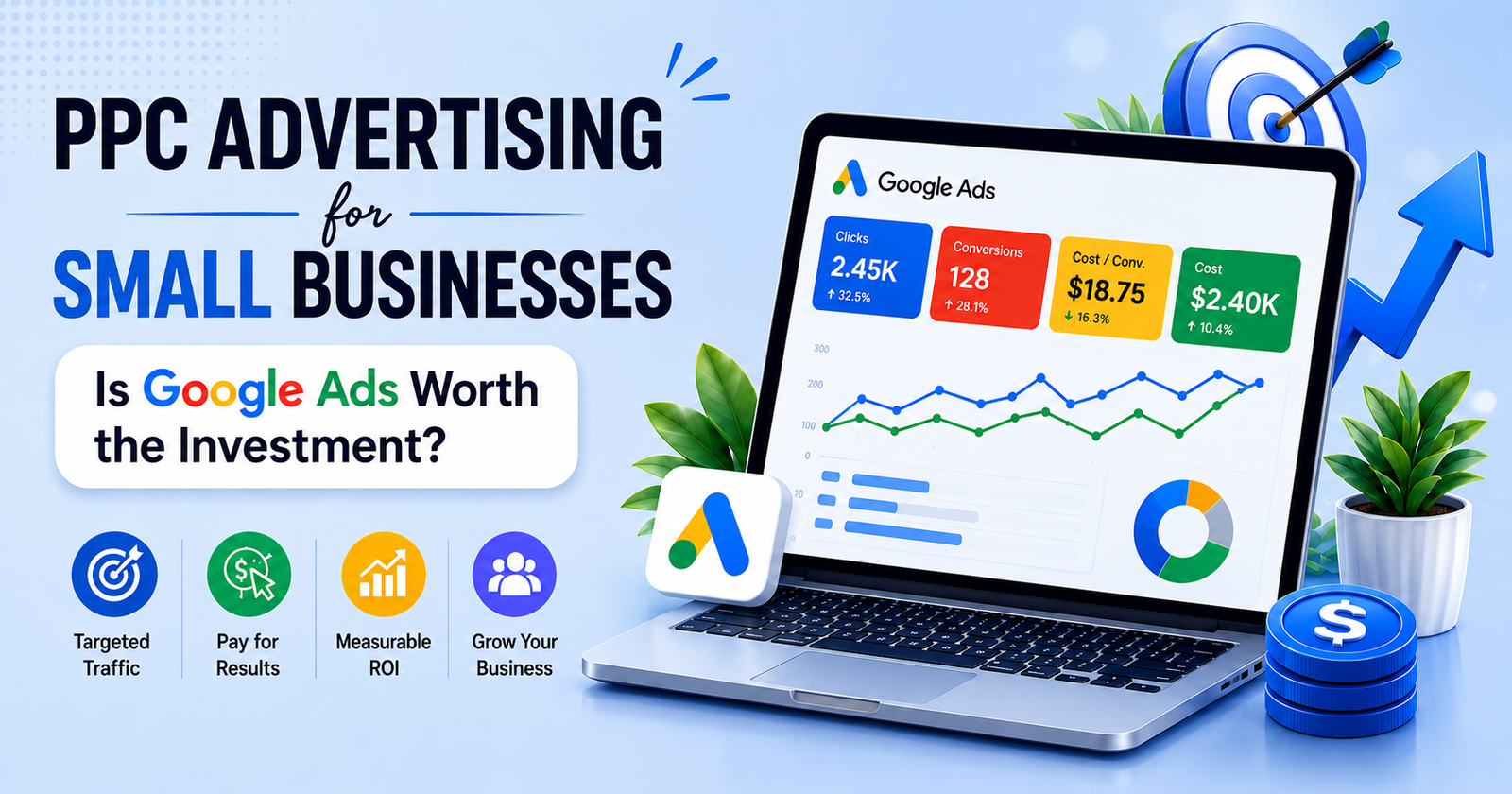
With pay-per-click marketing, businesses can monitor clicks, impressions, conversions, enquiries, and return on investment. This visibility allows owners to make informed decisions rather than relying on assumptions. When campaigns are reviewed regularly, adjustments can be made quickly to improve performance and reduce wasted spending.
Success Depends On More Than Just Running Ads
A common misconception is that launching a campaign automatically guarantees results. Unfortunately, it doesn’t work that way. Even the best advertising platform cannot compensate for a poor website, confusing messaging, or weak customer experience.
This is why professional PPC advertising services often focus on the complete customer journey rather than the advertisement alone. The landing page, offer, call-to-action, and user experience all influence whether visitors eventually become paying customers. Strong campaigns succeed because multiple elements work together effectively.
Competition Is Increasing Across Most Industries
As more businesses move online, competition for visibility continues to grow. Relying solely on organic reach can make it difficult to gain traction, especially in competitive markets where established brands already dominate search results.
That’s one reason many businesses use Google Ads for small business strategies alongside SEO and other marketing efforts. Paid advertising creates immediate visibility while longer-term strategies continue building authority and organic traffic in the background. The combination often delivers stronger results than relying on a single marketing channel.
Is Google Ads Actually Worth The Investment?
The answer depends largely on execution. Poorly managed campaigns can waste money quickly, but well-optimised campaigns can generate enquiries, leads, and sales that significantly outweigh advertising costs.
Businesses that invest in professional strategy, proper keyword research, and ongoing optimisation often discover that PPC advertising services provide a reliable source of qualified traffic. Rather than viewing Google Ads as an expense, many successful businesses eventually see it as a growth tool that supports predictable customer acquisition.
Final Thoughts
Google Ads is not a magic solution, but it remains one of the most effective ways to reach people who are actively searching for products and services online. For small businesses looking to generate visibility, enquiries, and measurable results, it offers opportunities that many traditional advertising channels simply cannot match. When campaigns are planned carefully and managed strategically, PPC advertising services can become a valuable investment rather than a marketing gamble.
Businesses looking to maximise their advertising performance can work with Glowing Digital to build data-driven campaigns focused on growth, efficiency, and long-term success.
FAQs:
1. What are PPC advertising services?
PPC advertising services assist businesses in designing, managing and optimising paid advertising campaigns on platforms such as Google Ads. Services typically include keyword research, campaign creation, budget management, performance measurement and ongoing optimisation to improve visibility, generate leads and maximise return on advertising investment.
2. Is Google Ads suitable for small businesses with limited budgets?
Yes, Google Ads for small business campaigns can be tailored to different budget levels. Businesses can control daily spending, target specific audiences, and focus on high-intent keywords. With proper planning and optimisation, even smaller budgets can generate valuable traffic and enquiries without excessive advertising costs.
3. How does pay-per-click advertising actually work?
With pay-per-click marketing, advertisers pay only when someone clicks on their advertisement. Businesses bid on keywords relevant to their products or services, and ads appear in search results when users enter those terms. This allows companies to attract targeted visitors who are actively searching online.
4. How quickly can businesses see results from Google Ads?
Unlike many long-term marketing strategies, paid advertising can start generating traffic shortly after campaigns go live. Many businesses using Google Ads for small businesses begin seeing impressions, clicks, and enquiries within days, although optimisation is usually required to improve performance over time.
5. Why do some Google Ads campaigns fail?
Campaigns often struggle when targeting is poor, keywords are irrelevant, landing pages are weak, or budgets are managed inefficiently. Professional PPC advertising services help reduce these issues by continuously monitoring performance, refining strategies, and improving campaign elements that influence conversions and overall results.

Rajveer Mahmia
Rajveer Mahmia is the Founder & CEO of Glowing Digital, a global AI-first SEO agency serving 100+ businesses worldwide. Starting in 2021, he built the agency around the future of search—combining AI SEO, AEO, GEO, LLM SEO, and Google SGE. Rajveer helps brands gain visibility across Google and AI search platforms like ChatGPT, Gemini, and Perplexity through data-driven, intent-focused organic growth systems.


