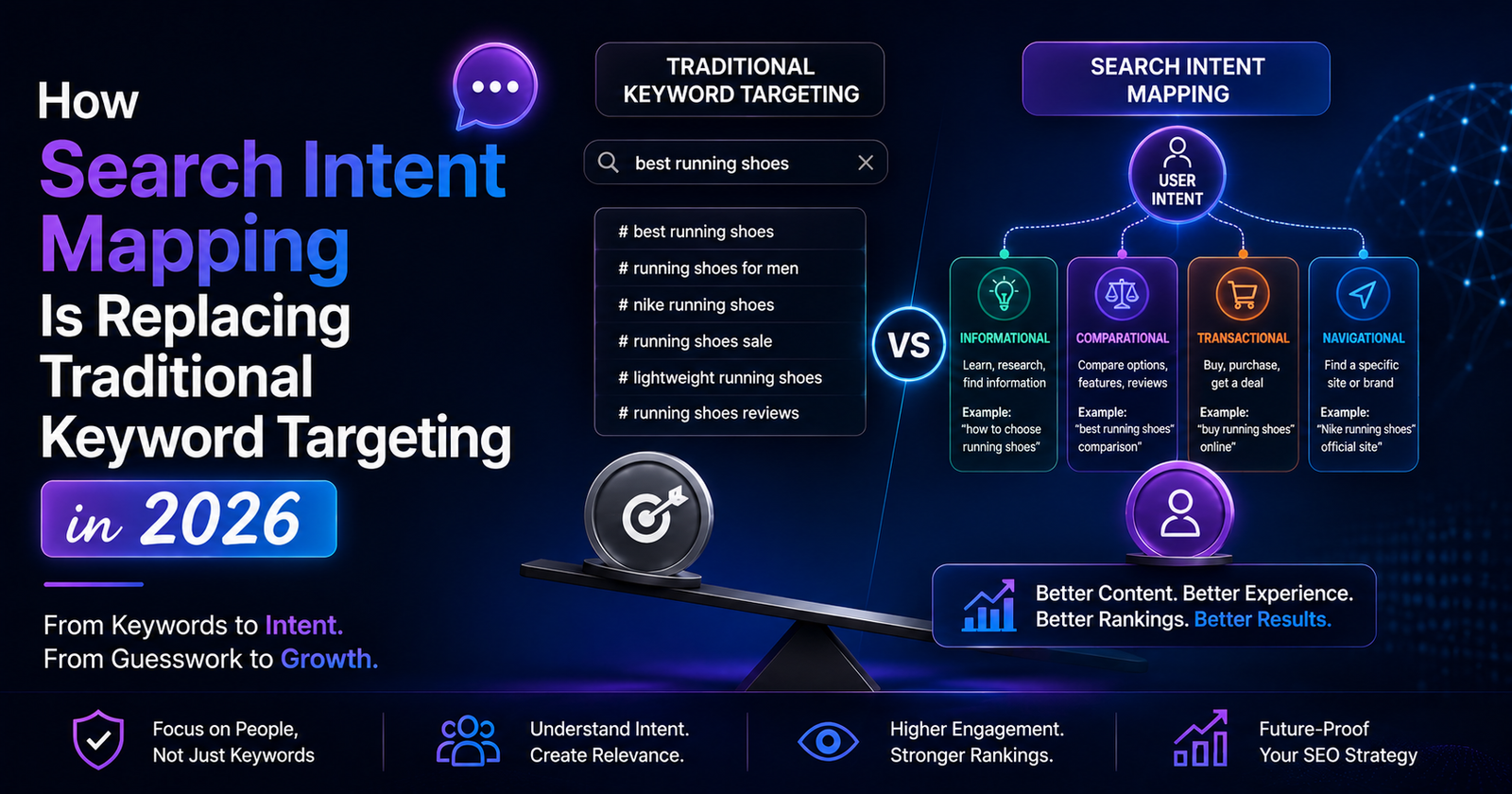
Search behaviour has evolved significantly as AI-powered search engines increasingly prioritise user intent over isolated phrases. Businesses no longer struggle with keyword density and tedious optimisation techniques.
Instead, search intent optimisation now shapes how brands structure websites, create informative content, and improve digital visibility across highly competitive online environments in 2026.
Why Traditional Keyword Targeting Is Losing Relevance
Earlier SEO strategies focused heavily on ranking individual keywords through repetitive placement across landing pages and blogs. Although keywords still matter, modern algorithms now evaluate context, behavioural signals, and user satisfaction more carefully. Search engines increasingly measure whether content genuinely answers user expectations instead of merely matching exact search phrases.
This shift has encouraged businesses to focus on audience behaviour, purchasing journeys, and information needs before creating content. Rather than targeting isolated search terms, companies now organise digital assets around broader search experiences and user objectives.
The Rise of Intent-Based Search Experiences
Modern AI search systems analyse meaning, context, and conversational relevance more effectively than earlier algorithms. As voice search and AI-generated answers continue expanding, search engines increasingly prioritise content that demonstrates topical relevance and clear informational value.
Businesses investing in search intent optimisation are restructuring website architecture to match informational, navigational, transactional, and commercial search journeys. This allows content to remain discoverable across multiple user touchpoints while improving engagement quality and search relevance simultaneously.
Why Content Depth Matters More in 2026
Shallow pages written purely for rankings rarely sustain visibility for long periods. Search engines now favour detailed resources that provide structured explanations, accurate information, and meaningful user engagement. Content must address broader subject intent rather than narrowly focusing on repeated terminology.
A carefully planned content strategy helps businesses organise educational resources, service pages, and supporting articles into cohesive topical clusters. This approach strengthens authority while helping users navigate information more naturally through connected and purposeful digital experiences.
AI Search Is Prioritising Behavioural Signals
Modern search engines increasingly rely on behavioural analysis to evaluate content performance. Metrics such as interaction time, navigation patterns, and content satisfaction now influence visibility more strongly than outdated keyword repetition practices.
As AI systems interpret engagement quality more accurately, businesses using search intent optimisation are creating more audience-focused experiences. Informative headings, contextual relevance, and improved readability now contribute significantly towards sustainable search visibility and long-term digital performance.
Search Intent Mapping Creates Smarter Website Structures
Intent mapping allows businesses to organise content according to specific customer journeys instead of fragmented keyword categories. Users searching for information, comparisons, or purchasing guidance now expect seamless transitions between related resources and service pages.
Companies offering organic SEO services increasingly structure websites around topic ecosystems rather than isolated ranking pages. This improves crawlability, enhances user navigation, and strengthens overall search relevance across evolving AI-driven search environments.
The Connection Between Search Intent and Conversion Quality
Higher rankings alone no longer guarantee meaningful business growth. Traffic without relevance often produces low engagement and weak conversion performance. Businesses, therefore, need strategies that appeal to audiences who are genuinely interested in products, services or solutions.
A refined content strategy improves conversion quality by aligning information with different stages of audience decision-making. Educational resources support early research phases, while comparison-based content helps users evaluate services more confidently before taking purchasing actions.
Why Businesses Are Adapting Their SEO Priorities
SEO in 2026 involves balancing technical optimisation with audience understanding. Businesses increasingly prioritise content usefulness, topical authority, and personalised experiences instead of relying on aggressive keyword placement techniques.
Specialists providing organic SEO services now focus heavily on search behaviour analysis, semantic relevance, and structured content development. These methods support stronger visibility across AI-generated search summaries, mobile-first indexing systems, and conversational search platforms shaping modern digital discovery.
Final Thoughts
As AI-driven search continues evolving, businesses must move beyond outdated optimisation methods focused purely on keyword rankings. Sustainable visibility increasingly depends on behavioural relevance, audience understanding, and strategic content alignment. Businesses seeking future-ready search performance often recognise the long-term value of structured intent mapping alongside evolving SEO methodologies from Glowing Digital.
FAQs :
1. Why is search intent optimisation important for SEO in 2026?
Modern search engines evaluate whether content genuinely satisfies user expectations rather than simply matching exact phrases. Search intent optimisation helps businesses align webpages with audience behaviour, improving engagement quality, search relevance, and conversion potential. This approach also strengthens visibility across AI-generated search experiences, conversational queries, and evolving mobile-first digital ecosystems globally today.
2. How do organic SEO services support long-term digital visibility?
Professional organic SEO services improve website structure, technical performance, content relevance, and audience targeting for sustainable online growth. Businesses benefit from stronger search visibility, improved user engagement, and better adaptability during algorithm updates. Continuous optimisation also enhances topical authority, helping brands remain competitive within rapidly changing digital search environments over extended periods successfully.
3. Why does a strong content strategy matter for search performance?
An effective content strategy organises information according to audience intent, improving relevance across different stages of the customer journey. Structured content helps users discover valuable resources naturally while supporting stronger engagement and search authority. Businesses using organised content frameworks often achieve better visibility, improved retention, and higher long-term conversion quality online consistently.
4. How are AI-powered search engines changing online visibility standards?
AI-powered search engines increasingly analyse behavioural signals, contextual relevance, and informational accuracy before ranking content online. Businesses must therefore prioritise readability, user satisfaction, and meaningful topic coverage instead of outdated optimisation tactics. This shift encourages websites to create audience-focused digital experiences supporting stronger engagement, trust, and sustainable long-term discoverability across industries globally.
5. What role does intent mapping play within modern website structures?
Intent mapping helps businesses organise webpages according to user goals, creating smoother navigation and clearer information pathways. Websites structured around audience needs often perform better across AI-driven search systems and mobile platforms. This method also strengthens topical relevance, helping users locate valuable information efficiently while improving overall engagement and digital accessibility consistently online.

Rajveer Mahmia
Rajveer Mahmia is the Founder & CEO of Glowing Digital, a global AI-first SEO agency serving 100+ businesses worldwide. Starting in 2021, he built the agency around the future of search—combining AI SEO, AEO, GEO, LLM SEO, and Google SGE. Rajveer helps brands gain visibility across Google and AI search platforms like ChatGPT, Gemini, and Perplexity through data-driven, intent-focused organic growth systems.


