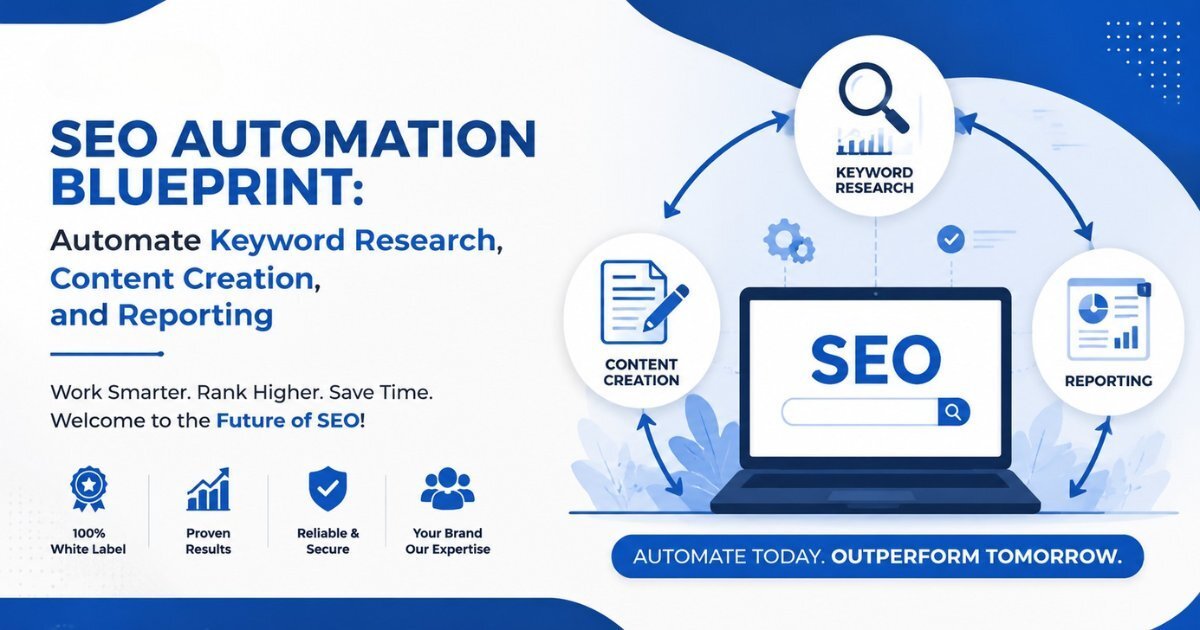
Search engine optimisation has become more complex than ever. Businesses are expected to publish high-quality content regularly, track keyword performance, analyse competitors, and generate reports—all while staying ahead of search engine updates. For many marketers, this can feel overwhelming.
This is where SEO Automation changes the game. By automating repetitive tasks, businesses can save valuable time, reduce manual errors, and focus on strategic growth. Imagine a marketing team spending hours every week researching keywords and preparing reports. With the right automation blueprint, those same tasks can be completed in minutes, allowing the team to focus on creativity and results.
In this guide, we’ll explore how to automate keyword research, content creation, and reporting to build a more efficient and scalable SEO strategy.
Why SEO Automation Matters for Modern Businesses
The digital landscape moves quickly. Search trends change, competitors publish new content, and customer behaviour evolves constantly. Manual SEO processes often struggle to keep pace.
SEO Automation helps businesses streamline repetitive activities such as keyword tracking, content planning, site audits, and reporting. By integrating automation into daily operations, marketing teams can work smarter rather than harder.
Benefits include:
- Faster execution of SEO tasks
- Improved data accuracy
- Better scalability for growing websites
- Increased productivity across marketing teams
- More time for strategy and optimisation
Businesses that embrace automation can react to opportunities faster and maintain a stronger online presence.
Automating Keyword Research for Better Search Visibility
Modern automated SEO tools can analyse search trends, identify long-tail keywords, monitor competitor rankings, and suggest content opportunities automatically. These tools continuously gather data, helping marketers discover valuable keywords without spending countless hours on research.
For example, a business launching a new service can use automation to identify high-intent keywords and track emerging search patterns. Instead of manually reviewing spreadsheets, teams receive actionable insights instantly.
By implementing SEO workflow automation, organisations can ensure keyword research remains consistent and up to date throughout the year.
Streamlining Content Creation with AI-Powered Solutions
Creating quality content at scale is one of the biggest challenges in digital marketing. Content teams often struggle to balance quantity with quality.
This is where AI SEO software becomes a valuable asset. AI-powered platforms can assist with topic generation, content briefs, headline suggestions, keyword optimisation, and content structure recommendations.
While human creativity remains essential, AI can significantly accelerate the content development process. Writers can focus on crafting engaging narratives while automation handles research and optimisation tasks.
Many successful brands now use AI SEO software to support content production, ensuring every article aligns with search intent and SEO best practices.
Automating SEO Reporting and Performance Tracking
Reporting is crucial for understanding SEO success, but manually compiling data from multiple sources can consume significant time.
With SEO workflow automation, businesses can automatically generate reports that track rankings, traffic, conversions, backlinks, and technical SEO performance. Automated dashboards provide real-time visibility into campaign progress, enabling faster decision-making.
These reports help stakeholders understand performance without waiting for manual updates. Marketing teams can identify opportunities, measure ROI, and adjust strategies quickly.
Using reliable automated SEO tools, businesses can create customised reports that are accurate, consistent, and easy to understand.
Conclusion
The future of digital marketing lies in efficiency, scalability, and intelligent decision-making. A well-designed SEO Automation blueprint enables businesses to automate keyword research, streamline content creation, and simplify reporting without sacrificing quality.
As automation technology continues to evolve, companies that embrace these solutions will gain a significant competitive advantage. Whether you’re a small business or an established enterprise, implementing SEO Automation can help you achieve better search visibility and long-term growth.
At Glowing Digital, we help businesses leverage advanced SEO strategies, automation technologies, and data-driven insights to maximise online success. If you’re ready to transform your SEO processes, we can guide you towards a smarter and more effective digital marketing future.
FAQs
1. What is SEO Automation and why is it important?
SEO Automation refers to using technology to automate repetitive SEO tasks such as keyword research, content optimisation, site monitoring, and reporting. It improves efficiency, reduces manual effort, increases accuracy, and allows marketers to focus on strategic activities that drive better search engine performance and business growth.
2. How does SEO workflow automation improve productivity?
SEO workflow automation streamlines processes by automatically handling recurring SEO activities like rank tracking, content scheduling, technical audits, and reporting. This saves significant time, minimises human error, improves consistency, and enables marketing teams to focus on creating impactful campaigns and achieving measurable results.
3. Which automated SEO tools are commonly used by businesses?
Many businesses use automated SEO tools for keyword research, competitor analysis, technical SEO audits, backlink monitoring, and performance reporting. These tools collect and analyse large volumes of data quickly, helping marketers identify opportunities, optimise campaigns, and improve overall search visibility more efficiently.
4. Can AI SEO software replace human content writers?
No, AI SEO software is designed to assist rather than replace human writers. It helps with research, keyword recommendations, content structuring, and optimisation. Human creativity, expertise, storytelling, and brand understanding remain essential for producing engaging, trustworthy, and valuable content that resonates with audiences.
5. Which keyword is most important when building an automation strategy?
The most important keyword in this discussion is SEO Automation because it encompasses the complete process of automating keyword research, content creation, technical optimisation, and reporting. A strong SEO Automation strategy enables businesses to improve efficiency, maintain consistency, and achieve sustainable search engine growth.

Rajveer Mahmia
Rajveer Mahmia is the Founder & CEO of Glowing Digital, a global AI-first SEO agency serving 100+ businesses worldwide. Starting in 2021, he built the agency around the future of search—combining AI SEO, AEO, GEO, LLM SEO, and Google SGE. Rajveer helps brands gain visibility across Google and AI search platforms like ChatGPT, Gemini, and Perplexity through data-driven, intent-focused organic growth systems.


