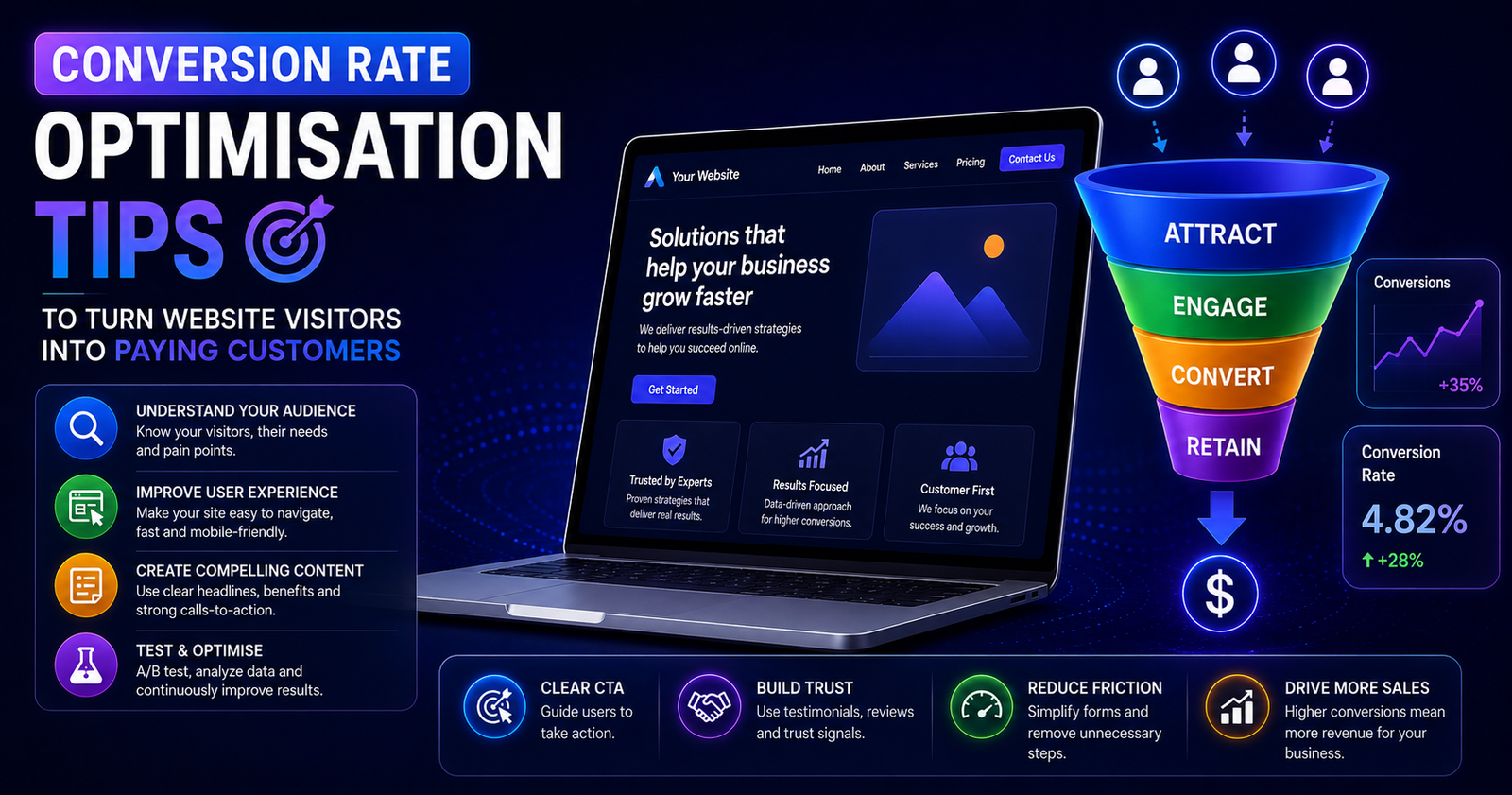
If you’ve ever looked at your website stats and thought, “People are visiting, but why aren’t they buying?”, you’re not alone. That’s exactly where conversion rate optimisation comes in. It’s less about chasing more traffic and more about making the most of the visitors you already have. Small tweaks in messaging, layout, and flow can quietly change how people behave on your site. And often, those small changes are what separate browsers from buyers.
How Conversion Rate Optimisation Improves Sales Outcomes
Conversion rate optimisation is the process of improving your website so more visitors take meaningful actions like buying, signing up, or enquiring. It works by removing friction, improving clarity, and guiding users toward decisions without confusion. When done right, it increases revenue without needing extra traffic or ad spend.
Make your website easier to understand and act on
A lot of websites lose customers simply because they’re not clear enough. People shouldn’t have to figure out what you do – they should see it instantly. This is where website conversion optimisation starts to matter practically.
Think of your homepage like a conversation. If it’s messy or vague, people switch off. But if it clearly explains your value and shows what to do next, they stay longer. Simple things like clearer headings, better button placement, and fewer distractions can make a big difference.
Even how you structure information matters. If users have to hunt for answers, they usually won’t. They’ll just leave. So, making things obvious is never a bad idea – it’s actually one of the easiest wins in improving performance.
Attract the right people before trying to convert them
Getting more visitors doesn’t always mean getting more customers. What really matters is who those visitors are. This is where lead generation strategies become important in shaping better results.
Instead of bringing in random traffic, you want people who already need what you offer. That could come from targeted content, focused ads, or landing pages built around specific problems. When intent is high, conversion becomes much easier.
A lot of businesses skip this step and wonder why their website doesn’t perform. But if the audience isn’t aligned, even the best website won’t convert well. So, improving targeting is just as important as improving design.
Small changes that quietly lift conversion rates
Once the right people land on your site, the experience needs to feel smooth. This is where conversion rate optimisation really shows its value in day-to-day performance.
Things like slow pages, long forms, or unclear calls-to-action can quietly kill conversions. On the flip side, faster load times, shorter forms, and clearer buttons can lift results without any extra traffic.This is also where testing helps. You don’t need to guess what works – you can try small changes and see what users respond to.
Over time, these insights build a much stronger understanding of what actually drives action. Interestingly, even small layout shifts or wording changes can sometimes outperform big redesigns. It’s less about guessing and more about observing behaviour.
Remove friction and build trust at every step
People rarely convert when they feel uncertain. That’s why trust is such a big part of website conversion optimisation. If visitors don’t feel confident, they won’t take action.
Simple trust signals like reviews, case studies, or even clear contact information can help. But it’s also about removing unnecessary effort. If something feels complicated, people tend to abandon it.
At the same time, lead generation strategies should support this stage too. When leads come in with the right expectations, they’re far more likely to convert later. It all connects back to clarity and consistency across the journey.
Key Takeaway
At the end of the day, conversion rate optimisation is really about understanding how people think and making your website easier for them to use. It’s not about tricks – it’s about clarity, trust, and small improvements that add up over time.
If you’re looking to refine this properly, working with experts like Glowing Digital can help you turn insights into real performance gains without wasting time on guesswork.
FAQs :
1. What is conversion rate optimisation in simple terms?
Conversion rate optimisation is improving a website so more visitors take action like buying or signing up. It focuses on removing confusion, improving layout, and making decisions easier for users. Instead of chasing more traffic, it helps you get better results from existing visitors through smarter design and testing approaches.
2. Why is conversion rate optimisation important for businesses today?
It helps businesses increase revenue without increasing marketing spend. By improving user experience and fixing drop-offs, more visitors convert into customers. In competitive markets, even small improvements matter. Using conversion rate optimisation ensures every click has a higher chance of turning into measurable business value and long-term growth.
3. How do lead generation strategies support conversions?
They attract the right audience who are already interested in your offer. This makes it easier to convert visitors into leads or customers. When combined with landing page improvements and messaging clarity, lead generation strategies improve both traffic quality and conversion rates, leading to better overall marketing performance.
4. What are the most effective ways to improve website conversions?
Focus on clear messaging, fast-loading pages, strong calls-to-action, and simple navigation. Testing different layouts and analysing user behaviour also helps. These improvements form the foundation of website conversion optimisation, ensuring visitors understand your offer quickly and take action without unnecessary friction or confusion during their journey.
5. How long does it take to see results from conversion rate optimisation?
Results depend on traffic volume and testing frequency. Some improvements show impact in weeks, while bigger changes take longer. Continuous testing, analysis, and refinement are key. Over time, conversion rate optimisation builds steady improvements that compound, leading to stronger performance and more consistent business growth.

Rajveer Mahmia
Rajveer Mahmia is the Founder & CEO of Glowing Digital, a global AI-first SEO agency serving 100+ businesses worldwide. Starting in 2021, he built the agency around the future of search—combining AI SEO, AEO, GEO, LLM SEO, and Google SGE. Rajveer helps brands gain visibility across Google and AI search platforms like ChatGPT, Gemini, and Perplexity through data-driven, intent-focused organic growth systems.


