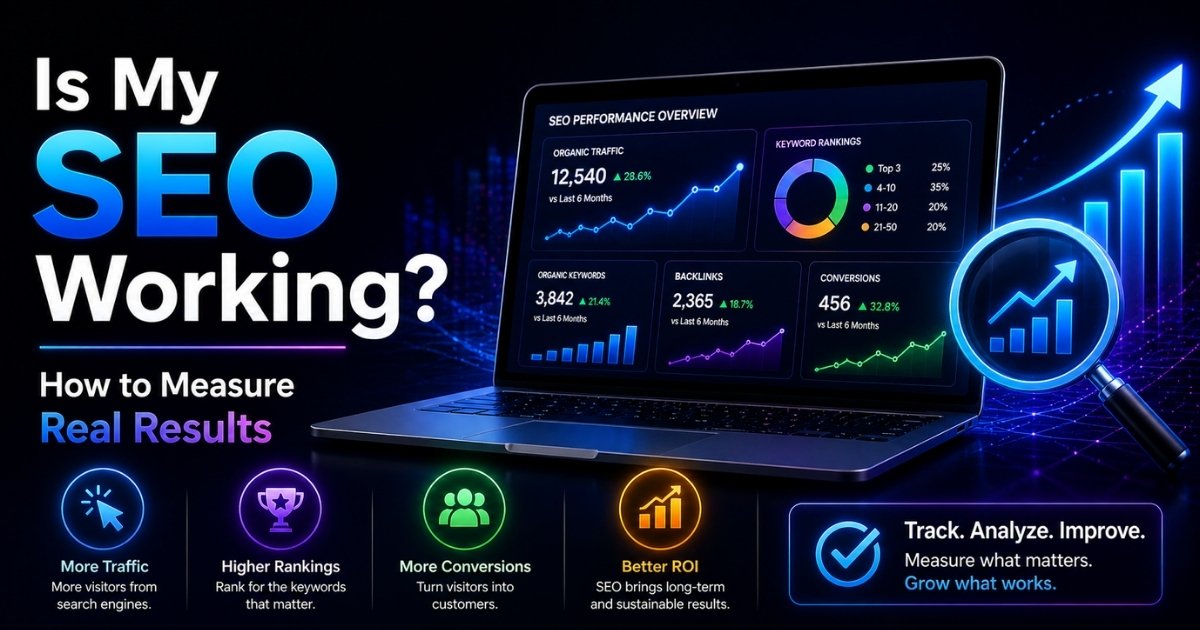
Investing in SEO is essential for long-term digital growth, but one common question persists – is it actually working? Understanding your SEO performance metrics is key to evaluating progress and making informed decisions. Unlike paid ads, SEO delivers gradual yet sustainable outcomes, so measuring the right indicators is crucial to determine real success.
SEO Performance Metrics for Measurable Growth
To determine if your SEO is effective, track SEO performance metrics such as keyword rankings, organic visibility, conversions, and user engagement. Consistent improvement across these indicators confirms your strategy is delivering meaningful and measurable results.
1. Growth in Organic Search Traffic
One of the clearest indicators of SEO success is an increase in organic search traffic. When your website attracts more visitors from unpaid search results, it signals improved visibility and relevance. Monitor this through tools like Google Analytics and Google Search Console for accurate, real-time insights.
2. Keyword Rankings and Visibility
Tracking how your target keywords rank on search engines helps measure progress. Rising rankings for relevant search terms indicate that your optimisation efforts are effective. However, focus on intent-driven keywords rather than vanity rankings to ensure meaningful outcomes.
3. Quality of Website Traffic
Traffic alone is not enough – quality matters. Analyse user behaviour metrics such as bounce rate, session duration, and pages per visit. If users stay longer and engage more, it suggests your content aligns well with their search intent.
4. Conversion Rates and ROI
SEO success ultimately depends on conversions. Whether it’s form submissions, purchases, or enquiries, improved conversion rates demonstrate that your SEO strategy is attracting the right audience and delivering tangible business value.
5. Backlink Profile and Authority
High-quality backlinks from credible websites enhance your domain authority and search rankings. Regularly auditing your backlink profile ensures your site maintains trustworthiness and avoids harmful links that could negatively impact performance.
6. Technical SEO Health
Technical factors like site speed, mobile responsiveness, and crawlability directly influence rankings. Regular audits help identify and fix issues that may hinder your SEO progress, ensuring your website meets current search engine standards.
7. Content Performance and Updates
Content remains central to SEO. Evaluate which pages drive the most engagement and conversions. Updating and optimising existing content based on performance data ensures continued relevance and improved rankings over time.
8. Local and Mobile SEO Signals
With increasing mobile usage and local searches, optimising for location-based queries is essential. Strong local SEO signals – like Google Business Profile engagement – indicate that your brand is visible to nearby audiences actively searching for your services.
Common Mistakes to Avoid
Many businesses expect instant SEO results from SEO, but it is a long-term strategy. Avoid focusing solely on rankings without analysing engagement and conversions. Ignoring technical issues or outdated content can also limit your growth potential.
When to Seek Expert Help
If your efforts are not delivering expected results from SEO, it may be time to consult professionals. Partnering with the best SEO agency in India ensures access to advanced tools, expertise, and data-driven strategies that accelerate growth while maintaining compliance with evolving algorithms.
Bottom Line
Measuring SEO success goes beyond rankings – it requires a holistic understanding of performance indicators, user behaviour, and business outcomes. By consistently analysing SEO performance metrics, you can refine your strategy and achieve sustainable growth. For businesses seeking expert guidance, Glowing Digital offers data-driven solutions and proven strategies to maximise your SEO potential and deliver measurable results.
FAQs
1. How long does it take to see SEO results?
SEO typically takes 3 to 6 months to show noticeable improvements, depending on competition and strategy. Tracking SEO results over time helps you understand progress, as consistent optimisation and content updates gradually improve rankings, visibility, and overall website performance.
2. What are the most important SEO metrics to track?
Key metrics include traffic, keyword rankings, engagement, and conversions. Monitoring SEO performance metrics ensures you evaluate both visibility and effectiveness, helping you understand whether your strategy is driving meaningful results aligned with your business goals and audience intent.
3. Why is my website getting traffic but no conversions?
This usually indicates a mismatch between user intent and your content or landing pages. While organic search traffic is increasing, improving user experience, call-to-actions, and relevance of content can help convert visitors into leads or customers effectively.
4. Can I do SEO on my own, or should I hire an agency?
While basic SEO can be managed independently, achieving consistent growth often requires expertise. Hiring professionals ensures access to advanced strategies, tools, and industry knowledge that can significantly improve your website’s performance and long-term digital success.
5. How often should I review my SEO performance?
It’s recommended to review your SEO performance monthly to track progress and identify issues. Regular analysis allows you to adjust strategies, update content, and stay aligned with search engine algorithm changes for sustained and measurable growth.
Rajveer Mahmia
Rajveer Mahmia is the Founder & CEO of Glowing Digital, a global AI-first SEO agency serving 100+ businesses worldwide. Starting in 2021, he built the agency around the future of search—combining AI SEO, AEO, GEO, LLM SEO, and Google SGE. Rajveer helps brands gain visibility across Google and AI search platforms like ChatGPT, Gemini, and Perplexity through data-driven, intent-focused organic growth systems.


